A Definitive Guide To Museum Lighting: Fixtures, Design Ideas, and LED Solutions

A Definitive Guide To Museum Lighting


🔴Introduction

Museum lighting is not only about making exhibits visible. It is about protecting valuable collections, guiding visitors through a space, creating atmosphere, and presenting every artwork or artifact in the most accurate and respectful way.

Unlike ordinary commercial lighting, museum lighting must balance two important goals: visibility and conservation. Too little light can make visitors struggle to see details, while too much light can cause fading, yellowing, darkening, or permanent material damage. Light damage is cumulative, meaning long exposure to low light can still damage sensitive objects over time.

This guide explains the key principles of museum lighting, including lux levels, color temperature, CRI, glare control, LED selection, showcase lighting, and practical design tips for modern galleries and exhibition spaces.


7 ideas for museum lighting

🟠 Why Museum Lighting Matters

Lighting has a direct influence on how visitors experience a museum. Good lighting helps people understand shape, texture, color, depth, and historical details. It also controls the mood of the space, supports wayfinding, and highlights the most important exhibits.

However, lighting can also be one of the biggest risks to collections. Ultraviolet radiation, infrared radiation, and visible light can all contribute to deterioration. UV can accelerate chemical damage, infrared creates heat, and visible light itself can still cause fading and material changes over time.

A professional museum lighting design should therefore consider:

  • Artwork protection
  • Visitor comfort
  • Accurate color rendering
  • Glare reduction
  • Flexible exhibition changes
  • Energy efficiency
  • Long-term maintenance


 🟡 Understand the Different Types of Museum Lighting

Museum lighting usually combines several lighting layers. Each layer has a different purpose.

Ambient Lighting

Ambient lighting provides the general brightness of the gallery. It helps visitors move safely through the space and creates the basic visual environment. In museums, ambient lighting is usually kept lower than normal retail or office lighting to reduce unnecessary exposure and make accent lighting more effective.

Common options include:

  • Recessed ceiling lights
  • Linear LED strips
  • Indirect cove lighting
  • Wall washing systems
  • Track-mounted fixtures

Accent Lighting

Accent lighting is used to highlight specific artworks, sculptures, artifacts, or architectural details. It creates focus and visual hierarchy.

For example, a painting may use adjustable spotlights, while a sculpture may require multiple angles of light to reveal texture and form.

Showcase Lighting

Showcase lighting is used inside display cabinets, glass cases, and exhibition vitrines. It requires special attention because heat, glare, reflection, and limited space can affect both the object and the viewing experience.

Low-voltage LED strips, mini linear LED modules, and flexible COB LED strips are common choices for showcase lighting because they can be installed discreetly and provide smooth, even illumination.

Decorative and Architectural Lighting

Decorative lighting supports the identity of the museum space. LED neon flex, hidden linear lighting, and customized LED strip solutions can be used for corridors, signage, ceilings, stair edges, immersive exhibitions, and interactive installations.

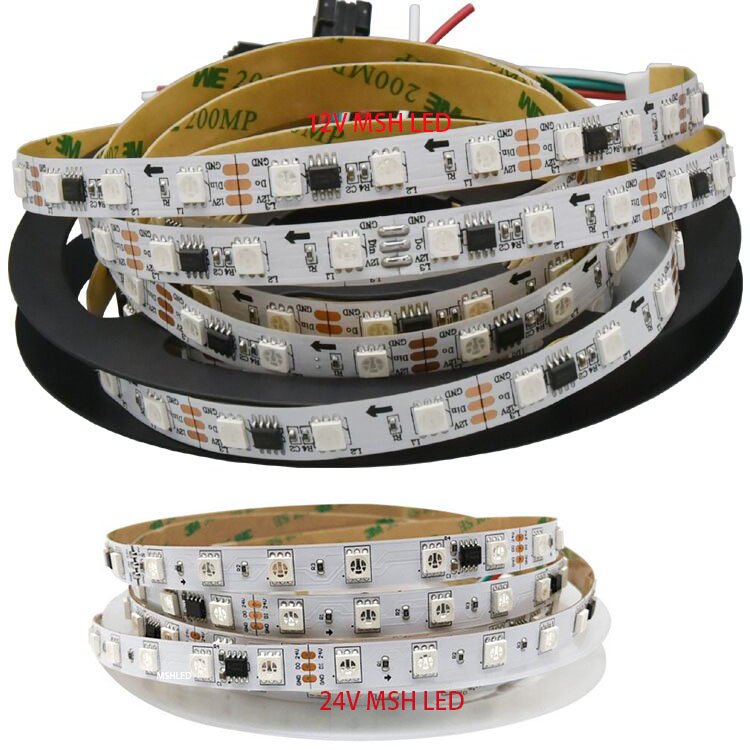
tm1934 5050rgb 10pixels 120leds 24v 20mm

🟢 Choose the Right Lux Level

Lux is the measurement of illuminance, or how much visible light reaches a surface. In museum lighting, lux control is very important because different materials have different sensitivity to light.

The Canadian Conservation Institute explains that 50 lux became a common museum benchmark because it allows viewers to see color and shape while reducing exposure for sensitive objects.

A general reference for museum lighting is:

Collection Type Recommended Light Level
Very sensitive objects such as textiles, paper, photographs, manuscripts, watercolors Around 50 lux
Sensitive or moderately sensitive objects such as oil paintings, leather, wood, painted surfaces Around 150 lux
Less sensitive objects such as metal, stone, ceramics, glass Around 300 lux

The Conservation Center for Art & Historic Artifacts recommends 50–100 lux for sensitive objects and emphasizes that exposure is controlled by both light level and time.

For museum projects, always confirm the final light level with the curator, conservator, or exhibition designer.


 🔵 Control UV and Infrared Radiation

Museum lighting should reduce unnecessary UV and IR as much as possible.

UV radiation is especially harmful to collections, while infrared radiation produces heat. The Library of Congress recommends reducing UV and IR radiation and notes that all display lighting should ideally provide visible light only, with UV and IR eliminated where possible.

For exhibition lighting, many conservation guidelines use 75 µW/lm as the maximum UV level, while lower levels such as 0–10 µW/lm are achievable with modern solutions.

Practical ways to reduce UV and IR include:

  • Avoid direct sunlight on exhibits
  • Use UV-filtering glass or acrylic
  • Use window films, blinds, or blackout systems
  • Choose high-quality LED lighting with minimal UV and IR
  • Keep heat-producing fixtures away from display cases
  • Use dimming, sensors, and timers to reduce exposure time


lighting solutions for different areas of museum


  🟣 Select High-Quality LED Lighting

LED lighting is now widely used in museums and galleries because it offers high efficiency, long life, flexible control, compact size, and low heat compared with many traditional light sources.

However, not every LED is suitable for museum lighting. The Canadian Conservation Institute notes that LED quality varies widely, and museums should carefully select LED lamps with good color performance.

When choosing LED lighting for museums, pay attention to:

CRI

CRI, or Color Rendering Index, measures how accurately a light source shows colors. For museum and gallery applications, high CRI is important because artworks and artifacts must appear natural and accurate.

A good target is CRI 90+ for most museum display areas.

R9 Value

R9 measures strong red color rendering. This is important for paintings, textiles, skin tones, wood tones, and warm-colored objects. The Canadian Conservation Institute recommends at least R9 50 for good museum lighting and R9 90 for excellent museum lighting.

Color Consistency

Museums should avoid visible color differences between fixtures. Use LED products with good binning and consistent CCT, especially for long linear lighting installations.

Flicker Control

Low-flicker LED lighting improves visual comfort and is important for photography, video recording, and interactive exhibitions.

Dimming Compatibility

Dimming allows museums to adjust the light level for different exhibitions. DALI, 0–10V, PWM, DMX, and smart control systems may be used depending on the project.


museum lighting led strip light


⚫ Choose the Right Color Temperature

Color temperature, measured in Kelvin, affects the visual atmosphere of the exhibition.

Common museum lighting color temperatures include:

Color Temperature Visual Effect Common Use
2700K–3000K Warm, soft, traditional Historical exhibits, paintings, wood, warm interiors
3500K Neutral warm Mixed collections, galleries, general exhibitions
4000K Neutral white Modern art, science museums, product-style displays
5000K Cool and clear Some photography, technical displays, special exhibitions

The Canadian Conservation Institute notes that 3000K is still a pleasant all-purpose choice for museum lighting, although some situations may prefer higher color temperatures up to 5000K.

The most important rule is consistency. Avoid mixing too many color temperatures in the same gallery unless it is part of the exhibition concept. more information, checking How to Choose LED Strip Color Temperature? 


color temperature of lights


  ⚪ Reduce Glare and Reflection

Glare can ruin the viewing experience. Visitors should be able to see the exhibit clearly without bright spots, harsh reflections, or uncomfortable contrast.

This is especially important for:

  • Glass display cases
  • Framed artworks
  • Glossy paintings
  • Metal objects
  • Interactive digital exhibits
  • Dark gallery environments

Ways to reduce glare include:

  • Use adjustable beam angles
  • Position lights outside the direct viewing angle
  • Use diffusers or frosted covers
  • Select anti-glare profiles
  • Use linear lighting for even illumination
  • Avoid placing strong lights directly opposite glass
  • Test the lighting from normal visitor viewing positions

For LED strip lighting, aluminum profiles with diffusers can help create smoother light and reduce visible LED dots.


why use led lights for museums


🟤 Use Flexible Lighting for Changing Exhibitions

Museums often change exhibitions, so lighting should be flexible. A fixed lighting design may work for one exhibition but fail for the next.

Flexible museum lighting can include:

  • Adjustable track lights
  • Dimmable LED strips
  • Modular linear lights
  • DMX-controlled lighting
  • Smart scene control
  • Separate lighting zones
  • Removable or adjustable showcase lighting

For temporary exhibitions, flexible LED strip lighting is useful because it can be customized by length, color temperature, waterproof level, voltage, and control method.

museum lighting


🔴  Pay Attention to Display Case Lighting

Display cases need careful lighting because the light source is close to the object. Poor case lighting can create heat buildup, uneven brightness, reflection, and maintenance problems.

Good showcase lighting should be:

  • Low heat
  • Low glare
  • Easy to hide
  • Easy to maintain
  • Dimmable
  • Stable in color
  • Safe for sensitive objects

Popular options include:

  • COB LED strip lights for dotless linear lighting
  • Mini LED strips for narrow spaces
  • Side-emitting LED strips for edge lighting
  • Aluminum LED profiles with diffusers
  • Low-voltage DC12V or DC24V LED strips
  • Custom-length LED strip solutions

For high-end display cases, the lighting should be tested with the actual object, glass, background material, and visitor viewing angle before final installation.

museum lighting mshled

 🟠 Consider LED Strip Lighting for Museum Projects

LED strip lights are useful in museum lighting because they are flexible, compact, and customizable. They can be used for both functional and decorative lighting.

Common applications include:

  • Display case lighting
  • Cove lighting
  • Wall washing
  • Shelf lighting
  • Stair lighting
  • Signage lighting
  • Interactive exhibitions
  • Immersive art installations
  • Architectural outline lighting
  • Hidden linear lighting

For museum applications, COB LED strips are often a good choice when the project needs smooth, dotless illumination. Addressable SPI LED strips can also be used for dynamic exhibitions, media art, and interactive installations where color-changing effects are required.

For outdoor museum areas, IP65, IP67, or IP68 waterproof LED strip lights can be selected depending on the environment.

colorful tube


  🟠 Use Smart Controls to Reduce Light Exposure

Because light damage is cumulative, reducing the time that objects are exposed to light is just as important as reducing brightness. The Conservation Center for Art & Historic Artifacts recommends strategies such as keeping exhibit spaces dark when closed and using motion sensors or curtains so objects are illuminated only when visitors are present.

Useful museum lighting controls include:

  • Dimmers
  • Motion sensors
  • Timers
  • Scene control
  • Occupancy sensors
  • Daylight sensors
  • DMX control
  • DALI control
  • Separate circuits for exhibit lighting and general lighting

For example, display case lights can be programmed to turn on only when a visitor approaches. This improves conservation and saves energy.

best museum lighting suppliers

 🔵 Avoid Common Museum Lighting Mistakes

Mistake 1: Using Too Much Light

Higher brightness does not always mean better viewing. For sensitive objects, excessive lux levels can shorten exhibition life.

Mistake 2: Ignoring UV and IR

Even if visible light looks comfortable, UV and IR may still cause damage. Always check the full lighting environment.

Mistake 3: Choosing Low-CRI LEDs

Low-quality LEDs can make artworks look dull, inaccurate, or distorted.

Mistake 4: Mixing Different Color Temperatures

Different CCTs in one gallery can make the exhibition look inconsistent and unprofessional.

Mistake 5: Forgetting Maintenance

LED lighting still requires maintenance planning. Museums should check dimming performance, color consistency, fixture position, and light levels regularly.

Mistake 6: Not Testing Before Installation

Always test the lighting with real objects, wall colors, case materials, and viewing angles before final installation.

museum lighting strip

  🟣 Museum Lighting Checklist

Before finalizing a museum lighting project, check the following:

  • What type of objects will be displayed?
  • Are the objects sensitive to light?
  • What lux level is required?
  • Is UV controlled?
  • Is IR heat controlled?
  • Is the LED CRI high enough?
  • Is the R9 value suitable?
  • Is the color temperature consistent?
  • Are the lights dimmable?
  • Is glare controlled?
  • Can the lighting be adjusted for future exhibitions?
  • Are lighting zones separated?
  • Are sensors or timers needed?
  • Is maintenance easy?
  • Has the lighting been tested on-site?

museum lighting mshled

🟢 Recommended LED Lighting Solutions for Museums

For museum, gallery, and exhibition lighting projects, different LED products can be selected according to the installation area.

COB LED Strip Lights

Best for smooth, dotless linear lighting in showcases, shelves, coves, and architectural details.

High-CRI LED Strip Lights

Best for artworks, display cabinets, and galleries where accurate color rendering is important.

Mini LED Strip Lights

Best for narrow display cases, small cabinets, and hidden lighting spaces.

Waterproof LED Strip Lights

Best for outdoor museum areas, landscape lighting, entrance lighting, and humid environments.

LED Neon Flex

Best for decorative lines, signage, immersive exhibitions, corridors, and architectural outlines.

Addressable SPI LED Strip Lights

Best for interactive exhibitions, media art, dynamic lighting, and creative installations.

 considerations for choosing museum lighting

🔵 Conclusion

Museum lighting requires more than brightness. It must protect collections, support accurate viewing, create atmosphere, and adapt to different exhibitions.

A good museum lighting system should use controlled lux levels, minimal UV and IR, high-quality LEDs, high CRI, proper glare control, flexible dimming, and smart lighting controls. Whether the project is a fine art gallery, history museum, science museum, cultural exhibition, or immersive art installation, the right lighting design can improve both conservation and visitor experience.

For customized museum LED strip lighting, showcase lighting, COB LED strips, LED neon flex, and addressable lighting solutions, MSH LED can support project-based customization including voltage, length, color temperature, waterproof level, PCB width, dimming, and control system.

museum lighting


🟢 FAQ About Museum Lighting

1. What is museum lighting?

Museum lighting is a specialized lighting design used to illuminate artworks, artifacts, display cases, galleries, and exhibition spaces while protecting collections from light damage.

2. Why is lighting important in museums?

Lighting affects visibility, color accuracy, visitor comfort, atmosphere, and collection preservation. Poor lighting can make exhibits difficult to see or cause long-term damage.

3. What lux level is suitable for museum lighting?

Sensitive objects are often displayed around 50 lux, while less sensitive materials may use 150 lux or 300 lux depending on the collection type and conservation requirements.

4. What is the best light for museum displays?

High-quality LED lighting with high CRI, good R9 value, low heat, dimming capability, and minimal UV and IR is commonly used for modern museum displays.

5. What CRI is recommended for museum lighting?

CRI 90+ is recommended for most museum and gallery applications because it helps display colors more accurately.

6. Why is R9 important in museum lighting?

R9 measures strong red color rendering. It is important for paintings, textiles, wood tones, skin tones, and warm-colored objects.

7. What color temperature is best for museums?

3000K is a common all-purpose choice, while 3500K, 4000K, or 5000K may be used depending on the exhibition style and object type.

8. Can LED strip lights be used in museums?

Yes. LED strip lights are widely used for display cases, cove lighting, shelf lighting, signage, stair lighting, and architectural lighting in museums.

9. Are COB LED strips good for museum lighting?

Yes. COB LED strips are suitable for smooth, dotless linear lighting, especially in display cases, shelves, and hidden architectural details.

10. How do museums reduce light damage?

Museums reduce light damage by lowering lux levels, controlling exposure time, eliminating UV and IR, using dimmers, installing sensors, and rotating sensitive objects.

11. Why should direct sunlight be avoided in museums?

Direct sunlight is too intense, difficult to control, and contains high levels of UV and heat, making it risky for many museum collections.

12. What is showcase lighting?

Showcase lighting is lighting installed inside or around display cabinets to illuminate objects clearly while controlling heat, glare, reflection, and exposure.

13. What lighting is best for glass display cases?

Low-heat LED strips, mini linear lights, COB LED strips, and diffused LED profiles are commonly used for glass display cases.

14. Can museum lighting be dimmable?

Yes. Dimmable lighting is highly recommended because different exhibits may require different lux levels.

15. What control systems are used in museum lighting?

Common museum lighting controls include DALI, DMX, 0–10V dimming, PWM dimming, motion sensors, timers, and smart scene control.

16. How often should museum lighting be checked?

Museum lighting should be checked regularly with light meters and UV meters, especially after installation changes, new exhibitions, or fixture replacements.

17. What is the difference between gallery lighting and museum lighting?

Gallery lighting often focuses on visual presentation and sales, while museum lighting must also consider long-term conservation and strict exposure control.

18. Is LED neon flex suitable for museums?

LED neon flex can be used for signage, decorative lines, corridors, immersive exhibitions, and architectural accents, but it should not be used too close to sensitive objects without proper control.

19. What is the best lighting for immersive museum exhibitions?

Addressable SPI LED strips, RGBW LED strips, DMX lighting, and LED neon flex are suitable for immersive and interactive exhibitions.

20. How can I choose the right LED strip for a museum project?

Choose according to brightness, CRI, color temperature, voltage, waterproof level, installation space, dimming method, and whether the lighting is for display, decoration, or dynamic effects.


How to Choose the Right Power Supply for Your LED Strip Project

Lorem ipsum dolor sit amet, consectetur adipiscing elit. Ut elit tellus, luctus nec ullamcorper mattis, pulvinar dapibus leo.

Choosing the right power supply for your LED strip project is crucial for ensuring optimal performance and longevity of your lighting system. Here’s a comprehensive guide to help you make the right choice:

1. Determine the Voltage of Your LED Strip

Step 1: Identify the Voltage Requirement
  • Common Voltage Options: Most LED strips operate at 12V DC, while some require 24V DC. Check the product description, specifications, or product photos for voltage markings (e.g., “12V” or “24V”).
  • Example: If you’re using a WenTop Waterproof LED Strip Light SMD 3528, verify its voltage in the product description or specifications. If unsure, look for voltage markings on the strip itself.


2835 led strip light 12v
Step 2: Match the Power Supply Voltage
  • Ensure the power supply’s output voltage matches your LED strip’s requirement (e.g., 12V for a 12V strip).
  • Confirm the input voltage (AC side) matches your region’s standard (e.g., 120V for North America).
 
12v power supply

2. Calculate the Power Draw of Your LED Strip

Step 1: Find Wattage or Amperage Specifications
  • Look for wattage (W) or amperage (A) listed as W/m, A/m, or simply W/A.
  • Example: A strip rated at 24W total or 4.8W/m (5 meters per reel) draws 24W per reel.
Step 2: Calculate Amperage (If Not Listed)
  • Use the formula , where is wattage, is voltage, and is amperage.
  • Example: For a 24W, 12V strip: → Amps.
Step 3: Check Power Supply Capacity
  • Ensure the power supply’s wattage and amperage ratings exceed the LED strip’s requirements.
  • Example: A 36W (3A) power supply can safely power a 24W (2A) strip. The supply adjusts output based on demand, so it won’t overheat or damage the strip.

3. Choose the Right Connection Method

Step 1: Check the Power Supply Connector
  • Most supplies come with a 5.5mm x 2.1mm connector. Ensure compatibility with your LED strip’s DC plug.
  • Note: A 5.5mm x 2.5mm connector may not fit standard LED strip plugs.
Step 2: Verify Strip Configuration
  • Pre-Cut Strips with DC Plug: Directly connect the power supply to the strip.
  • Bare Wire Ends (Red & Black): Use an adapter to connect the power supply to the strip’s wires.

4. Additional Considerations

a. Indoor vs. Outdoor Use
  • Indoor Strips: Suitable for dry environments.
  • Waterproof Strips: Required for outdoor or wet areas. Pair with a waterproof power supply for prolonged exposure to water.
b. Dimmable vs. Non-Dimmable
  • Dimmable Lights: Require a dimmable driver and compatible power supply.
  • Non-Dimmable Lights: Choose a supply based on wattage and voltage capacity.
c. Plug-In vs. Hardwired
  • Plug-In Supply: Easy for temporary setups (e.g., rearranging displays).
  • Knockout Version: Hardwire for a permanent, clean installation controlled by a wall switch.

5. Calculate Total Power Needs

Step 1: Estimate Total Wattage
  • Multiply watts per foot by the strip length. For example, a 4.4W/ft strip over 10 feet: Watts.
Step 2: Apply the 80% Rule (Derating)
  • Divide total wattage by 0.8 to account for heat and ensure longevity.
  • Example: Watts. Choose a supply with at least 55W capacity.

6. Select a Reputable Supplier

  • Quality Matters: Opt for certified products (UL or ETL listed) from trusted suppliers like HitLights.
  • Support & Warranty: Look for suppliers offering warranties, technical support, and project design assistance.

Final Tips

  • Overcapacity is Safe: A supply with higher wattage/amperage won’t harm your strip—it adjusts output as needed.
  • Avoid Undercapacity: An undersized supply can cause flickering, dimming, or premature failure.
By following these steps, you’ll ensure your LED strip project is efficient, safe, and tailored to your needs. Happy lighting!
rgbw strip (1)

Getting Started with LED Strip Lighting for Your Home

LED Strip Lights Buyer's Guide

LED strip lighting has revolutionized the way we illuminate our homes, offering a blend of energy efficiency, versatility, and aesthetic appeal. Whether you’re looking to enhance the ambiance of your living space or add a touch of modernity to your interior design, LED strip lights are an excellent choice. This guide will help you understand the basics of LED strip lighting, its benefits, and how to get started with it in your home.

What Are LED Strip Lights?

LED strip lights are flexible circuit boards adorned with surface-mounted LEDs. They often come with an adhesive backing, making them easy to install on a variety of surfaces. These lights are available in various types, including single-color, color-changing, waterproof, and digital pixel options. Originally used for backlighting and accent lighting, LED strips have now become a popular choice for both residential and commercial lighting due to their affordability and ease of use.

Benefits of LED Strip Lights

  1. Energy Efficiency: LED strip lights consume significantly less power than traditional incandescent bulbs, reducing your energy consumption by up to 60-70%. This not only lowers your electricity bills but also reduces your carbon footprint.
  2. Long Lifespan: LEDs have a lifespan of up to 50,000 hours, meaning you can enjoy the same installation for a decade or more without needing to replace a single bulb. This longevity makes them a cost-effective lighting solution in the long run.
  3. Versatility: LED strip lights are highly customizable and can be cut to size or connected together to fit various installations. They are available in different colors, color temperatures, and brightness levels, making them suitable for a wide range of applications.
  4. Ease of Installation: Most LED strip lights come with self-adhesive backing, allowing for effortless installation on almost any surface without the need for special tools. Some models also feature Plug & Play technology, enabling centralized control via a remote.

Safety: LED bulbs produce less heat compared to incandescent bulbs, making them safer to use around children and pets. They are also less likely to cause fires or damage fixtures and wiring.

Types of LED Strip Lights

  1. Single Color LED Strip Lights: These are the most common type, available in warm, neutral, and cool white, as well as colored options like pink, red, green, blue, and yellow. They provide subtle, understated effects or bold brightness.
  2. Color Changing LED Strip Lights: These strips use a different LED chip capable of producing over 16 million colors. They come in RGB, CCT, RGB+W, and RGB+CCT options and work best with an LED controller and remote.
  3. Water Resistant LED Strip Lights: Designed for use in environments exposed to moisture, these strips come in various IP ratings (IP44 to IP68) and are suitable for bathrooms and kitchens.
  4. Digital Pixel LED Strip Lights: Similar to color-changing strips, these use a RGB LED chip and a pixel chip to produce animated lighting effects like chasing, pulsing, and strobing. They require a pixel controller for operation.

How to Get Started with LED Strip Lighting

  1. Assess Your Needs: Determine the purpose of the LED strip lights in your home. Are you looking for ambient lighting, accent lighting, or task lighting? This will help you choose the right type of strip.
  2. Choose the Right Type: Based on your needs, select the appropriate type of LED strip light. Consider factors like color, brightness, and waterproofing.
  3. Plan Your Installation: Before purchasing, plan where you want to install the LED strips. Measure the length required and determine the number of strips needed. Consider the voltage requirements and power supply.
  4. Install the Strips: Most LED strip lights are easy to install. Simply remove the adhesive backing and stick the strips onto a clean, dry surface. For more complex installations, you may need to cut the strips, mount them, and connect the wiring.

Control Your Lights: Decide how you want to control your LED strip lights. Options include remote controls, smartphone apps, and voice assistants. Some strips also support dimming and programming.

Creative Ideas for Using LED Strip Lights

  1. Illuminate Furniture: Use LED strips to highlight cabinets, shelves, and display cases. Run them along the top and bottom of cupboards or behind shelves for a dramatic effect.
  2. Gaming Setup: Create an immersive gaming experience by installing colored LED strips around your TV, along the walls, or near your speakers. Choose colors like purple, red, or blue for an out-of-this-world feel.
  3. Ambient Lighting: For a relaxed atmosphere, use warm white LED strips. Pair them with small lamps and consider using a dimmer switch to control the intensity of the light.
  4. Staircases: Install LED strips along the bottom of your stairs to improve safety and add an elegant touch to your hallway.

Children’s Bedrooms: Let your kids express themselves with color-changing LED strips. Line the skirting boards or bed frame for a fun and safe lighting solution.

Conclusion

LED strip lights offer a modern, energy-efficient, and versatile lighting solution for your home. Whether you’re looking to enhance the ambiance of your living space or add a touch of creativity to your interior design, LED strip lights can help you achieve your goals. With a wide range of types and easy installation, getting started with LED strip lighting has never been easier. Start exploring the possibilities today and transform your home with the magic of LED strip lights.

strip connector

How to connect led lights together

How to Connect LED Light Together Two and Multi LED Strip Lights Together


Led light strips are becoming more and more popular for both indoor and outdoor use. Many people are using them for the room, ceiling, and even bedroom lighting because of their amazing colors. Some people even use multiple led strip lights together to create an amazing effect. However, when we install the led strips, we always need DIY or projects such as connecting two led strips together or even multiple led strip lights together! But don’t worry, it’s not as difficult as it sounds. Here are a few tips on how to connect two led strips together.

Can you cut led light strips?

Yes, That’s right, you can easily cut led light strips only on the line where they are marked!

To begin with, you’ll need to gather a few supplies such as a soldering iron, solder, wire cutter, and heat shrink tubing. Then, you’ll need to cut the two led strips so that they’re the same length. Next, you’ll need to solder the positive and negative wires of each strip together. Be sure to use heat shrink tubing around the connection to prevent shorts. Finally, you can tape or glue the two strips together. That’s it! You’ve now successfully connected two led strips together.

Is there a way to connect led strip lights together?

Can LED strip lights be joined together?

  • Yes, You should choose the version that is cuttable and can be joined together with enough power supply!
  • You can connect led lights together!

If you want to re-connect several LED strips that were already cut before, there’s no need for worry. Simply follow any one of the methods we mentioned below and your task will be completed quickly with ease!

LED strips are often sold as single-color or LED color-changing lamps. If you want to connect two different types of these lights together, make sure they’re both compatible with each other first!

Connecting two LED Strips light from different brands is possible if they are both rated for the same voltage and have a similar layout.

LEDs come in different voltage flavors, so it’s important to know which one you have before connecting them all together. Some strips operate at 5V DC while others can handle 12 volts of power–and there are even higher-voltage options like 24 volts!

How to Connect Two LED Light Strips Together, Step by Step

How to Connect Multiple LED Strip Lights Together

1) Measure the length of the LED strip lights you want and mark the cut position.

2) Cut the LED strip lights at the marked position using a sharp knife or scissors.

3) Calculate the voltage and power for the desired LED strip light length.

4) Make sure you are using the correct adapter to avoid voltage decrease.

5) There are two ways to connect the LED strip lights: clipping and using connectors, or clipping and using a cable with a connector.

6) If you choose to use connectors, make sure they are properly connected to the LED strip light and circuit board.

7) If you choose to use a cable with a connector, make sure it is properly connected to the LED strip light and circuit board.

8) If you choose to clip and solder the LED strip lights together, make sure the connection is tight and secure.

9) Protect the connecting position with some form of insulation (e.g. electrical tape).

The Power Supply issue you need to pay attention to :

  1. For 12V led lights power supply, The voltage will decrease more than 5m (16.4ft)
  2. For 24V led strip lights power supply, The voltage will decrease more than 10m (32.8 feet)
  3. If we want to connect two or more led light strips, You need to be ready for enough power supply!

The important thing you need to consider is the wattage of the power supply.

eg: assume you have an LED strip that draws about 24W of power. If we want to add another full-length strip, the total will be 48 watts and this needs special attention because there are many factors involved like length and brightness level which all affect how much energy is needed for your setup!

There’s no perfect solution here but I recommend getting at least 60 Watts from any device providing electricity as well as being aware of what kind (battery operated vs plug) so it doesn’t brick anything when moving around during performances etc…

How to connect led lights together with connector

There are different types of LED Strip connectors, so it is important to get the right type for your LED Strip. If you have a single-color LED Strip, then you need a connector with two copper pads. If you have an RGB LED Strip, then you need a connector with four copper pads.

Once you have the right connector, all you have to do is connect the copper pads on the LED Strip to the corresponding copper pads on the connector. Make sure that the polarity is correct, so that the positive and negative terminals are connected correctly.

As far as we know, there are three variants of connectors.

The first type of connector is a clamp style that clamps both the LED Strips together and covers them with a flip cover. With this style, the connection between two LED Strips will look seamless as if they were actually a single strip.

The second type of connector has pins on both sides and a small cable in the middle. This variant is extremely useful if you want to make angles with the LED Strips or avoid any obstacles.

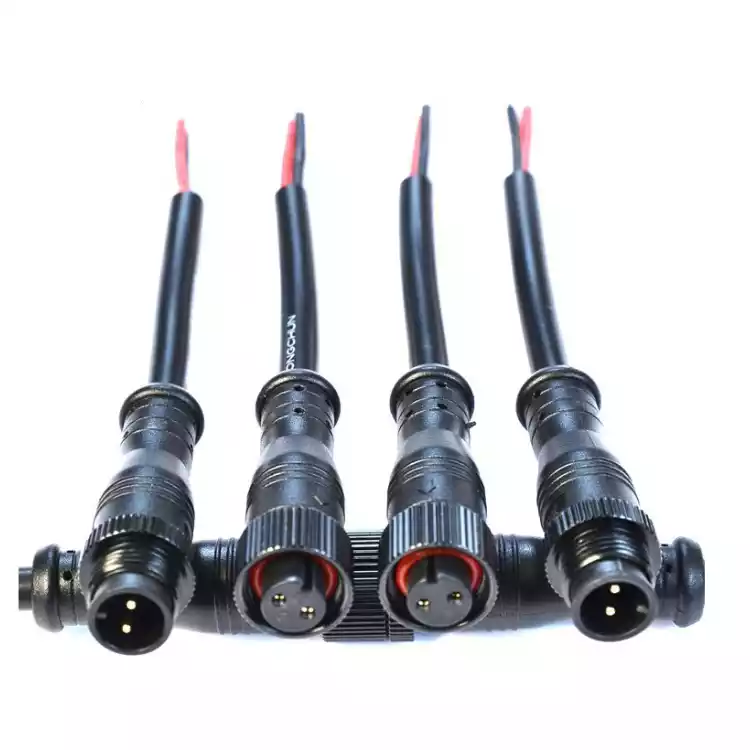
The third type of connector has a connecting clip only one end of the cable while the other end is just exposed wire. This connector is useful at the starting (or ending) where you want to connect the strip with the power supply.

Led Strip Lights Connector Two Method

Simple Method 1: Clipping and connecting led lights together with connector

  1. Use LED Strip Lights Solderless Connector
  2. Be careful to push the led strip lights after cutting into the connector piece
  3. Close the connector if insert well

Simple Method 2: Clipping and connecting led strip lights together with a connector of the cable

  1. Use LED Light Strips Solderless Connector with cable
  2. Be careful to insert the led light strip after cutting into the connector piece
  3. Close the connector if insert well

How to connect led strips together without connectors

If you are not familiar with soldering or do not have the necessary tools/equipment and hands-on experience, we recommend using a connector cable.

Single LED Strip Lights

With a single LED strip, you have two pads: one for positive supply and another for negative. Make sure that both strips are connected to different parts of your circuit so they don’t short out!

RGB LED Strip Lights

If you have an RGB LED Strip and want to connect to another compatible RGB LED Strip, then you need to be a bit more careful. This is because, any typical RGB LED Strip will have four copper pads, in the same area as the two copper pads, which was the case with the single-color strip.

Since each color (red, green, blue) needs its own connection, it’s important to make sure that the copper pads on both strips are aligned. If they’re not aligned, then your LED Strip won’t light up.

Connect led strips together without connectors- Method

Professional Method 3: If you want to connect led strips together without connectors, then soldering is what’s needed.  Before soldering, check the polarity of the copper pads on the LED Strips.

Step 1: Clip the led strip lights to be connected together.

Step 2: Add solder to the LEDs on the end of each light strip.

Step 3: Solder the led taps to pin to pin.

Step 4: If all works well, it is complete!

If not, you can try again.

The method for soldering single color or RGB Led Strips is exactly the same. Check that your strips are compatible, align them correctly (and properly) on alder wood boards with copper pads, and then solder them together to make sure they work!

How Many LED Strips Can you Connect Together?

How many led strips can I connect together

1. Generally speaking, there is no limit to the number of LED strips that can be connected, but you should take into account the power supply. It may be necessary to change to a more powerful cable and connector, which is not easy for most people.

2. However, it is not recommended to connect too many LED strips. It is better to buy a long LED strip light as you wish because the power supply will be enough and there will be no other problems!


Can you cut addressable RGB strips? Easy Cutting Guide

Can you cut addressable RGB strips?  Easy Cutting Guide

Whether you’re looking to illuminate your kitchen cupboards or backlight your TV, with LED strip lights, there’s a solution to everything. Favored for their versatility, LED strips to consist of a series of LED emitters installed onto a narrow, flexible circuit board.

There’s just one cause for concern. Most LED strips come as long reels between 3ft and 16ft in length. Will they continue to work if they are trimmed down?

Yes, LED strip lights will carry on working after they’ve been cut as long as you cut along the designated lines. LED strips are made up of several individual circuits, so each cut line demarcates the end of one circuit and the start of a new one. Cutting elsewhere on the LED strip will cause that circuit, and potentially the whole strip, to cease working. MSHLED Strip Light is one example of a high-quality LED light that can be cut without damaging the circuitry.

So, if you need to customize the length of your LED strip lights, simply find the cut lines and make your cuts accordingly. With careful trimming, you can create the perfect lighting solution for any space.

1. What you’ll need

When you’re ready to cut your addressable RGB strip, there are a few things you’ll need to have on hand.

First, you’ll need a sharp knife or scissors.

Second, you’ll need a ruler or tape measure to make sure you’re cutting the strip in a straight line.

Finally, you’ll need something to catch the excess RGB LEDs – we recommend using a piece of cardboard or a paper plate.

Once you have all of your materials, follow these steps to cut your addressable RGB strip: 1) Measure and mark the spot where you want to make your cut. 2) Use your sharp knife or scissors to carefully make a straight cut along the marked line. 3) Hold onto the end of the strip that you just cut, and allow the excess LEDs to fall onto your cardboard or paper plate. 4) Discard the excess LEDs and enjoy your new custom-length RGB LED strip!

2. How to cut an LED strip

LED strips are a great way to add accent lighting to any space, and they’re relatively easy to install. However, cutting an LED strip can be a bit tricky, as you need to be careful not to damage the individual LEDs. Here’s a step-by-step guide on how to cut an LED strip:

1. Measure the length of the LED strip you need and mark the spot where you want to make the cut.

2. Using a sharp knife or pair of scissors, carefully cut the strip at the marked spot.

3. Once the strip is cut, you’ll need to Soldier or heat shrink the exposed wires to prevent them from shorting out.

4. That’s it! You can now install your LED strip in its desired location.

3. If you make a mistake

If you’re cutting your own MSHLED strip light, it’s important to be careful and make sure you don’t make any mistakes. Otherwise, you could end up damaging the LEDs or causing other problems. Here are a few tips to help you avoid making mistakes when cutting MSHLED strip lights:

First, always use sharp scissors or a sharp knife when cutting the strip light. This will help you get a clean cut and avoid damaging the LEDs.

Second, make sure you measure the strip light carefully before cutting it. It’s important to get the measurements right so that you don’t end up with too much or too little light.

Third, if possible, use a guide to help you make straight cuts. This will again help you avoid damaging the LEDs.

Finally, once you’ve made your cuts, test the lights to make sure they’re working properly.

Following these tips should help you avoid making mistakes when cutting MSHLED strip lights.

4. Common mistakes people make when cutting LED strips

If you’re looking to add some extra lighting to your home, LED strips are a great option. They’re easy to install and can be used in a variety of ways, from under-cabinet lighting to accent lighting. However, there are a few common mistakes people make when cutting LED strips.

One mistake is cutting the strip too short. When you cut an LED strip, you need to leave about an inch of the extra strip at each end. This ensures that you’ll have enough strips to connect to the power source and makes it easier to hide any exposed wires.

Another mistake is cutting the strip at an angle. When you cut the strip, the cut should be perpendicular to the flat edge of the strip. This ensures that the exposed wires will be facing downwards, making them less visible and less likely to be damaged.

Finally, some people make the mistake of not sealing the exposed wires. When you cut an LED strip, the exposed wires can be susceptible to water damage and short-circuiting. To protect the wires, simply apply a small amount of heat-shrink tubing or electrical tape over them.

By following these simple tips, you can avoid common mistakes and get the most out of your LED strips.

DIY: How to Solder LED Strips

Solderless connectors are the easiest way to connect LED strips, but if you’re looking for a more permanent connection, soldering is the way to go. Soldering is a simple process that anyone can do, and it only takes a few minutes. Here’s a step-by-step guide on how to solder LED strips:

1. Start by stripping about ½ inch of the insulation off the end of the strip light.

2. Next, tin the wires by applying a small amount of solder to them. This will help the wires stay in place and makes it easier to solder them together.

3. Now, twist the positive (red) wires together and solder them in place. Then, do the same for the negative (black) wires.

4. Once the wires are soldered together, trim any excess wire and apply a small amount of heat-shrink tubing over the connection.

5. That’s it! Your LED strip is now soldered and ready to be installed.

6. Tips for soldering LED strips

If you’re going to be soldering LED strips, there are a few things you need to keep in mind.

First, always use lead-free solder when working with electronics. Lead-free solder is safe and won’t damage the LED strips.

Second, it’s important to use a clean, flat surface when soldering. This will help you avoid making any mistakes.

Finally, make sure you have all the necessary tools before you start soldering. You’ll need a soldering iron, some lead-free solder, and some heat-shrink tubing.

By following these simple tips, you can Solder your LED strips like a pro!

How to install LED strip lights

Installing LED strip lights is a simple process that anyone can do. There are a few things you need to keep in mind, though. First, make sure you have all the necessary tools and materials. You’ll need a power supply, LED strip lights, soldering iron, solder, and heat-shrink tubing.

Second, it’s important to read the instructions that come with your LED strips. This will help you avoid making any mistakes.

Third, when installing the LED strips, make sure you leave about an inch of extra strip at each end. This ensures that you’ll have enough strip to connect to the power source and makes it easier to hide any exposed wires.

Finally, when cutting the LED strips, be sure to cut them at a perpendicular angle to the flat edge of the strip. This ensures that the exposed wires will be facing downwards, making them less visible and less likely to be damaged.

By following these simple tips, you can install LED strip lights like a pro!


5. Final thoughts

LED strips are becoming more and more popular due to their versatility and low cost. But many people don’t know how to cut them properly, which can lead to damaged strips or shortened lifespans. In this guide, we’ll show you how to easily cut LED strips without damaging them, as well as common mistakes people make when cutting LED strips.

But what if you don’t need a whole reel? If you want to trim down an LED strip light, it’s important to know how. Our team at MSHLED is here to help. Contact us today for all of your LED lighting needs – we have everything from addressable RGB strips to single-color LEDs. We guarantee that we have the perfect solution for your next project!

car light

How to Install LED Lights in A car -car warning light

Adding automotive LED light strips to the interior and exterior of your vehicle can make it appear as if it came directly from the Fast and Furious franchise. These lovely, long-lasting lights bring a splash of color to the sidewalk beneath your car. They can also illuminate base areas and tree trunks, making it easier to see what’s inside.


Because LED lights are known for their low energy use, these 12V automotive LED light bars will not affect the power consumption of your vehicle. LED lights may save you a lot of time, whether you want to make a statement on the road or merely want to find sunglasses and groceries in your car more quickly.


What LED Light Bars Should You Purchase?

Some important considerations to make while selecting the best-LED light bar for your needs.


Do you require LED strips for indoor, outdoor, or automotive applications?

Do you desire strips that come in a variety of colors and lighting patterns?

Do you want to be able to adjust the brightness?

Do you want the light to respond to music?

Do you require a specific LED strip length?

LED strips are also available at a range of prices, allowing you to achieve the desired aesthetic effect while staying within your budget.


Always take measurements before purchasing LED strips to make your project go more quickly and smoothly. MSHLighting can also handle the cutting and welding for you; get a quote today!


If you like the effects of your LED light bar, you might want to look into the many alternative non-light bars LED lighting solutions for your car, which come with free installation guidelines. -Customer


Some tips before installing led strip light to the car 

  1. Clean the place before installing the strip
  2. Heat the adhesive tape with a hair drier before applying it for a greater adhesive effect.


The installation strip steps for the car.

  1. Remove the rear self-adhesive and wrap the strip light around the border of the door.
  2. Pry the door light cover open, then disconnect the connector.
  3. Hide the wire by pulling it to the position of the car door light.
  4. Connect the wires, with the red wire representing positive polarity (+) and the black wire representing negative polarity (-). (-).
  5. Finish by installing the light cover.

car light

How to compare Addressable RGB LED Light Strips WS2811, WS2812B, WS2813, WS2815, SK6812,   APA102C 

Today I am comparing the different normal addressable led strips, talking about their technical specifications, then I’m gonna help you figure out which one is the best-led strip lights for your project.

5V Addressable Strip

WS2812b led strip lights

The most well-known chip currently is the ws2812b chip. This chip became very famous partly because Adafruit gave it the name “Neopixels” and made it available to the general public a few years ago.

It can do 30LEDs/M, 60LEDs/M, 144LEDs/m. Black and White PCB.

One Pixel with One LED, each LED can be cut. Detail as below, It with all WIFI controllers and Offline controllers.

WS2812B LED Strip

Ws2813 led strip

Refresh Frequency updates reach 2 KHz, 5v compatible, and dual signal wires so that if one led gets damaged, the signal should still transfer to all other chips. (almost same with ws2815, but voltage different).

 Any led broken will not affect another led unless two consecutive LEDs are broken.

30LEDs/M, 60LEDs/M,144LEDs/M.

PN Working current Working temperature Package LED number Viewing angle Lifespan Working voltage Pixel/M
S010030-WS2813RGB 1.8A/meter -40℃~60℃ 5meter/roll 30pcs/meter 140 50000h DC 5V 30Pixels/M
S010060-WS2813RGB 3.6A/meter -40℃~60℃ 5meter/roll 60pcs/meter 140 50000h DC 5V 60Pixels/M
S012144-WS2813RGB 8.64A/meter -40℃~60℃ 2meter/roll 144pcs/meter 140 50000h DC 5V 144Pixels/m

SK6812 RGBW LED Strip

 This chip runs PWM at about 1.2kHz making it better in the regard to the ws2812b too, and Adafruit used it the same with ws2812b. It does RGBW mostly.


APA102C (SPI) LED Strip

APA102 PWM Frequency is 19khz

 It also isn’t a clockless chip with only three wires (+, -, data) but instead uses a 4 wire protocol (+, -, clock, data). The APA102 also has some advantages in regards to settable brightness and tune-able color spectrums. APA102 is also the brightest LED strip before, so if you need a lot of light output, this might be your LED chip! The APA102 can also be bought in full white variants giving you for instance warm white addressable LED strips.


SMD2020 APA102C and SMD5050 APA102C for your choice.

1)SMD2020 APA102C 200leds/m, 288leds/m, 

2) SMD2020 APA102C, 72leds/PC, 227cm length customize.

apa102c led strip

3)SMD5050, APA102C, 30LEDs/M, 60LEDs/M, 144LEDs/M. Black and White PCB.

apa102c led strip

12V strip light

WS2815 led strip

A new chip from the creators of the WS2812B and compatible with the same protocol. The main improvements are a higher internal PWM frequency (around 2kHz), 12v compatible (5v logic signal), and dual signal wires (DI, BI, GND, 12V), so that if a chip gets damaged the signal should still reach all other chips. This causes ws2815 to use more watts than a ws2812b running the same pattern.

WS2815 LED Strip

WS2811 LED Strip 

It is the cheapest addressable led strip, It is one signal cable, three cables (GND, DAT, 12V/24V), The voltage 12V/24V both available. RGBW and RGB color for more choice.

WS2811 IC uses pixel light and Amusement Pixel light widely.

ws2811 strip


3d led pixel ball curtain

DMX 3D LED Project

It is a DMX 3d led ball project. with two-sided light effects can be seen from 360 degrees for unique and vivid effects. The constant current driver being designed on double size, which contributes to the protection of LEDs’ lifespan. DMX512 Protocol, sharing long-distance transmission and high ability of anti-interference. Light and audio controlled synchronously, music controllable. Environment friendly, no harsh glare, and buzzing noise, no flicker. Any DMX Controller compatible, DMX led lighting control solution. We use solid capacitors, make the led more stable, the lifespan is over 50000h. We have a short circuit, over current, over-temperature protection design. The efficient power management makes our LED save 40% power. The 3d ball lights are DC24V, this makes the led color more stable. The 3d ball is controlled by a DMX controller and software. The software is a center of light, the software outputs signals to the DMX controller, and the controller transforms the sign into tubes. It can change the color and movement of the tube. With 4000pcs 3d pixel ball light, make a curtain vivid. With Madrix to do programming.  
ws2812b mini led strip

Mullinsen, Liard, Chou Ming and others entered the list of 500, and Debon and Hangke launched filament lamps.

01
Mullins, Liard, and Chau Ming join together in the New Economy Enterprise 500!
On November 28th, the “Top 500 New Economy Enterprises in China 2020” list was released in Hangzhou. On November 28th, “2020 China’s Top 500 New Economy Enterprises” was released in Hangzhou.

▲The press conference
The “China’s Top 500 New Economy Enterprises” competition selects the market/valuation as the main index for the evaluation of the top 500 new economy enterprises and revises the market/valuation based on six categories of enterprise-scale, growth rate, profitability, technology-driven, talent and employment, and nine sub-categories of public opinion as the revision indexes to finally produce the list of China’s top 500 new economy enterprises.
According to the list, advanced manufacturing is the most dominant industry in the New Economy 500, with 256 companies.
Among them, BOE, TCL, Da Clan Laser, Dongshan Precision, Konka, Woodlinson, Lazard, and Chou Ming are all on the list.

02
Together we win! Depot Lighting Signs Strategic Cooperation Agreement with Hangke Optoelectronics

Ltd. and Hangke Optoelectronics Group Co., Ltd. strategic cooperation signing ceremony were held in the import and export company of Desbon. Mr. Li Qiang, Vice General Manager of Depp on Lighting, and Mr. Yan Qianjun, Chairman of Hangke Optoelectronics, signed a strategic cooperation agreement on behalf of the two parties to cooperate on LED filament lamp products and to focus on the development of filament lamp products and markets by pooling their resources.

As a leading enterprise in China’s lighting industry, Deppon Lighting has been working with nearly 500 importers, distributors, and distributors in more than 80 countries and regions around the world for more than 20 years with the advantages of “technology development + professional manufacturing” and the service concept of “customer satisfaction first”. In the domestic market, we have established a nationwide network of offline dealers, direct strategic customer channels, and online e-commerce platform channels, and have accumulated a wide range of customer groups and established an excellent brand image. Over the years, the company’s overall strength has been ranked among the top ten in the industry, and the export of LED lighting products has been among the top three in the industry for many years.
The two sides will work together to establish a close strategic partnership, which will combine the R&D, brand, customer resources, and global marketing advantages of Depp on and the industry chain layout and manufacturing advantages of Hangke in niche areas, and give full play to the advantages of both sides to develop two-way empowerment, so as to form the core competitiveness of LED filament lamp category in terms of scale and differentiation, and provide better filament lamp solutions for global customers, which will not only help strengthen Deppon’s position as a leading enterprise in the lighting industry but also greatly promote Hangke’s growth into a leading enterprise in the global market in the field of filament lamp and achieve a mutually beneficial and win-win development.

03
Zhou Ming raised 880 million yuan to push Daya Bay LED display intelligent production line construction and other projects

Recently, CHARMING disclosed the prospectus for the issuance of shares in the Growth Enterprise Market to specific targets. The issuance to the specific target is domestic listed RMB ordinary shares (A shares). The issue of fund-raising does not exceed 88,350.00 million yuan (including), after deducting the issue expenses, the net amount of fund-raising all invested in the following projects.

Chau Ming Technology said that the purpose of the stock issue is: first, to promote the company’s development strategy, consolidate and improve the industry position; second, to expand production scale, to solve the problem of LED display production capacity shortage.
Among them, the fundraised for the construction project of LED display intelligent production line in Daya Bay of Zhouming Science and Technology is 570,800,000 Yuan, with a total investment of 95,984,200 Yuan. Continuity Technology intends to use advanced automatic production line, automatic logistics line and intelligent warehousing, etc., to establish a group LED display intelligent manufacturing base in Daya Bay, producing small pitch LED display, Mini LED display.