A Definitive Guide To Museum Lighting: Fixtures, Design Ideas, and LED Solutions

A Definitive Guide To Museum Lighting


🔴Introduction

Museum lighting is not only about making exhibits visible. It is about protecting valuable collections, guiding visitors through a space, creating atmosphere, and presenting every artwork or artifact in the most accurate and respectful way.

Unlike ordinary commercial lighting, museum lighting must balance two important goals: visibility and conservation. Too little light can make visitors struggle to see details, while too much light can cause fading, yellowing, darkening, or permanent material damage. Light damage is cumulative, meaning long exposure to low light can still damage sensitive objects over time.

This guide explains the key principles of museum lighting, including lux levels, color temperature, CRI, glare control, LED selection, showcase lighting, and practical design tips for modern galleries and exhibition spaces.


7 ideas for museum lighting

🟠 Why Museum Lighting Matters

Lighting has a direct influence on how visitors experience a museum. Good lighting helps people understand shape, texture, color, depth, and historical details. It also controls the mood of the space, supports wayfinding, and highlights the most important exhibits.

However, lighting can also be one of the biggest risks to collections. Ultraviolet radiation, infrared radiation, and visible light can all contribute to deterioration. UV can accelerate chemical damage, infrared creates heat, and visible light itself can still cause fading and material changes over time.

A professional museum lighting design should therefore consider:

  • Artwork protection
  • Visitor comfort
  • Accurate color rendering
  • Glare reduction
  • Flexible exhibition changes
  • Energy efficiency
  • Long-term maintenance


 🟡 Understand the Different Types of Museum Lighting

Museum lighting usually combines several lighting layers. Each layer has a different purpose.

Ambient Lighting

Ambient lighting provides the general brightness of the gallery. It helps visitors move safely through the space and creates the basic visual environment. In museums, ambient lighting is usually kept lower than normal retail or office lighting to reduce unnecessary exposure and make accent lighting more effective.

Common options include:

  • Recessed ceiling lights
  • Linear LED strips
  • Indirect cove lighting
  • Wall washing systems
  • Track-mounted fixtures

Accent Lighting

Accent lighting is used to highlight specific artworks, sculptures, artifacts, or architectural details. It creates focus and visual hierarchy.

For example, a painting may use adjustable spotlights, while a sculpture may require multiple angles of light to reveal texture and form.

Showcase Lighting

Showcase lighting is used inside display cabinets, glass cases, and exhibition vitrines. It requires special attention because heat, glare, reflection, and limited space can affect both the object and the viewing experience.

Low-voltage LED strips, mini linear LED modules, and flexible COB LED strips are common choices for showcase lighting because they can be installed discreetly and provide smooth, even illumination.

Decorative and Architectural Lighting

Decorative lighting supports the identity of the museum space. LED neon flex, hidden linear lighting, and customized LED strip solutions can be used for corridors, signage, ceilings, stair edges, immersive exhibitions, and interactive installations.

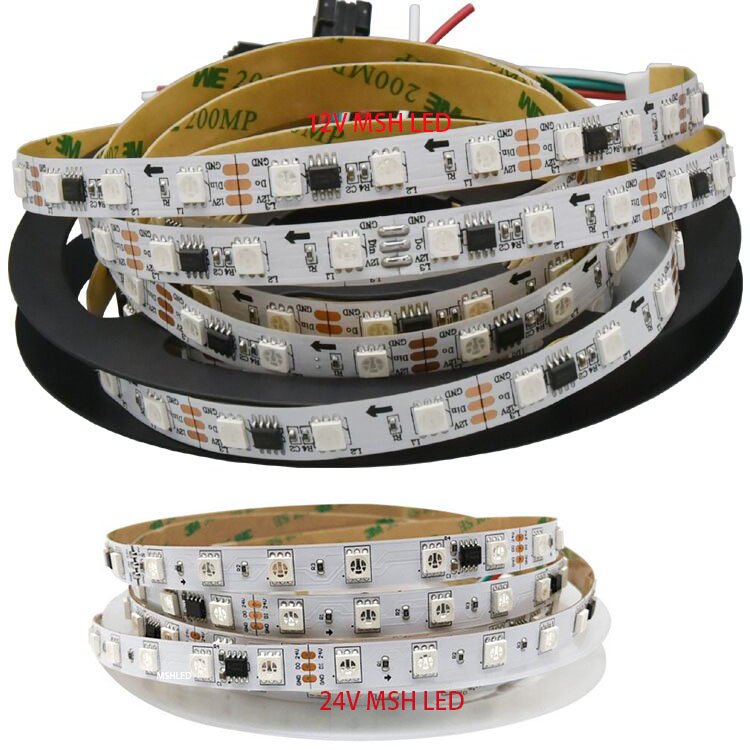
tm1934 5050rgb 10pixels 120leds 24v 20mm

🟢 Choose the Right Lux Level

Lux is the measurement of illuminance, or how much visible light reaches a surface. In museum lighting, lux control is very important because different materials have different sensitivity to light.

The Canadian Conservation Institute explains that 50 lux became a common museum benchmark because it allows viewers to see color and shape while reducing exposure for sensitive objects.

A general reference for museum lighting is:

Collection Type Recommended Light Level
Very sensitive objects such as textiles, paper, photographs, manuscripts, watercolors Around 50 lux
Sensitive or moderately sensitive objects such as oil paintings, leather, wood, painted surfaces Around 150 lux
Less sensitive objects such as metal, stone, ceramics, glass Around 300 lux

The Conservation Center for Art & Historic Artifacts recommends 50–100 lux for sensitive objects and emphasizes that exposure is controlled by both light level and time.

For museum projects, always confirm the final light level with the curator, conservator, or exhibition designer.


 🔵 Control UV and Infrared Radiation

Museum lighting should reduce unnecessary UV and IR as much as possible.

UV radiation is especially harmful to collections, while infrared radiation produces heat. The Library of Congress recommends reducing UV and IR radiation and notes that all display lighting should ideally provide visible light only, with UV and IR eliminated where possible.

For exhibition lighting, many conservation guidelines use 75 µW/lm as the maximum UV level, while lower levels such as 0–10 µW/lm are achievable with modern solutions.

Practical ways to reduce UV and IR include:

  • Avoid direct sunlight on exhibits
  • Use UV-filtering glass or acrylic
  • Use window films, blinds, or blackout systems
  • Choose high-quality LED lighting with minimal UV and IR
  • Keep heat-producing fixtures away from display cases
  • Use dimming, sensors, and timers to reduce exposure time


lighting solutions for different areas of museum


  🟣 Select High-Quality LED Lighting

LED lighting is now widely used in museums and galleries because it offers high efficiency, long life, flexible control, compact size, and low heat compared with many traditional light sources.

However, not every LED is suitable for museum lighting. The Canadian Conservation Institute notes that LED quality varies widely, and museums should carefully select LED lamps with good color performance.

When choosing LED lighting for museums, pay attention to:

CRI

CRI, or Color Rendering Index, measures how accurately a light source shows colors. For museum and gallery applications, high CRI is important because artworks and artifacts must appear natural and accurate.

A good target is CRI 90+ for most museum display areas.

R9 Value

R9 measures strong red color rendering. This is important for paintings, textiles, skin tones, wood tones, and warm-colored objects. The Canadian Conservation Institute recommends at least R9 50 for good museum lighting and R9 90 for excellent museum lighting.

Color Consistency

Museums should avoid visible color differences between fixtures. Use LED products with good binning and consistent CCT, especially for long linear lighting installations.

Flicker Control

Low-flicker LED lighting improves visual comfort and is important for photography, video recording, and interactive exhibitions.

Dimming Compatibility

Dimming allows museums to adjust the light level for different exhibitions. DALI, 0–10V, PWM, DMX, and smart control systems may be used depending on the project.


museum lighting led strip light


⚫ Choose the Right Color Temperature

Color temperature, measured in Kelvin, affects the visual atmosphere of the exhibition.

Common museum lighting color temperatures include:

Color Temperature Visual Effect Common Use
2700K–3000K Warm, soft, traditional Historical exhibits, paintings, wood, warm interiors
3500K Neutral warm Mixed collections, galleries, general exhibitions
4000K Neutral white Modern art, science museums, product-style displays
5000K Cool and clear Some photography, technical displays, special exhibitions

The Canadian Conservation Institute notes that 3000K is still a pleasant all-purpose choice for museum lighting, although some situations may prefer higher color temperatures up to 5000K.

The most important rule is consistency. Avoid mixing too many color temperatures in the same gallery unless it is part of the exhibition concept. more information, checking How to Choose LED Strip Color Temperature? 


color temperature of lights


  ⚪ Reduce Glare and Reflection

Glare can ruin the viewing experience. Visitors should be able to see the exhibit clearly without bright spots, harsh reflections, or uncomfortable contrast.

This is especially important for:

  • Glass display cases
  • Framed artworks
  • Glossy paintings
  • Metal objects
  • Interactive digital exhibits
  • Dark gallery environments

Ways to reduce glare include:

  • Use adjustable beam angles
  • Position lights outside the direct viewing angle
  • Use diffusers or frosted covers
  • Select anti-glare profiles
  • Use linear lighting for even illumination
  • Avoid placing strong lights directly opposite glass
  • Test the lighting from normal visitor viewing positions

For LED strip lighting, aluminum profiles with diffusers can help create smoother light and reduce visible LED dots.


why use led lights for museums


🟤 Use Flexible Lighting for Changing Exhibitions

Museums often change exhibitions, so lighting should be flexible. A fixed lighting design may work for one exhibition but fail for the next.

Flexible museum lighting can include:

  • Adjustable track lights
  • Dimmable LED strips
  • Modular linear lights
  • DMX-controlled lighting
  • Smart scene control
  • Separate lighting zones
  • Removable or adjustable showcase lighting

For temporary exhibitions, flexible LED strip lighting is useful because it can be customized by length, color temperature, waterproof level, voltage, and control method.

museum lighting


🔴  Pay Attention to Display Case Lighting

Display cases need careful lighting because the light source is close to the object. Poor case lighting can create heat buildup, uneven brightness, reflection, and maintenance problems.

Good showcase lighting should be:

  • Low heat
  • Low glare
  • Easy to hide
  • Easy to maintain
  • Dimmable
  • Stable in color
  • Safe for sensitive objects

Popular options include:

  • COB LED strip lights for dotless linear lighting
  • Mini LED strips for narrow spaces
  • Side-emitting LED strips for edge lighting
  • Aluminum LED profiles with diffusers
  • Low-voltage DC12V or DC24V LED strips
  • Custom-length LED strip solutions

For high-end display cases, the lighting should be tested with the actual object, glass, background material, and visitor viewing angle before final installation.

museum lighting mshled

 🟠 Consider LED Strip Lighting for Museum Projects

LED strip lights are useful in museum lighting because they are flexible, compact, and customizable. They can be used for both functional and decorative lighting.

Common applications include:

  • Display case lighting
  • Cove lighting
  • Wall washing
  • Shelf lighting
  • Stair lighting
  • Signage lighting
  • Interactive exhibitions
  • Immersive art installations
  • Architectural outline lighting
  • Hidden linear lighting

For museum applications, COB LED strips are often a good choice when the project needs smooth, dotless illumination. Addressable SPI LED strips can also be used for dynamic exhibitions, media art, and interactive installations where color-changing effects are required.

For outdoor museum areas, IP65, IP67, or IP68 waterproof LED strip lights can be selected depending on the environment.

colorful tube


  🟠 Use Smart Controls to Reduce Light Exposure

Because light damage is cumulative, reducing the time that objects are exposed to light is just as important as reducing brightness. The Conservation Center for Art & Historic Artifacts recommends strategies such as keeping exhibit spaces dark when closed and using motion sensors or curtains so objects are illuminated only when visitors are present.

Useful museum lighting controls include:

  • Dimmers
  • Motion sensors
  • Timers
  • Scene control
  • Occupancy sensors
  • Daylight sensors
  • DMX control
  • DALI control
  • Separate circuits for exhibit lighting and general lighting

For example, display case lights can be programmed to turn on only when a visitor approaches. This improves conservation and saves energy.

best museum lighting suppliers

 🔵 Avoid Common Museum Lighting Mistakes

Mistake 1: Using Too Much Light

Higher brightness does not always mean better viewing. For sensitive objects, excessive lux levels can shorten exhibition life.

Mistake 2: Ignoring UV and IR

Even if visible light looks comfortable, UV and IR may still cause damage. Always check the full lighting environment.

Mistake 3: Choosing Low-CRI LEDs

Low-quality LEDs can make artworks look dull, inaccurate, or distorted.

Mistake 4: Mixing Different Color Temperatures

Different CCTs in one gallery can make the exhibition look inconsistent and unprofessional.

Mistake 5: Forgetting Maintenance

LED lighting still requires maintenance planning. Museums should check dimming performance, color consistency, fixture position, and light levels regularly.

Mistake 6: Not Testing Before Installation

Always test the lighting with real objects, wall colors, case materials, and viewing angles before final installation.

museum lighting strip

  🟣 Museum Lighting Checklist

Before finalizing a museum lighting project, check the following:

  • What type of objects will be displayed?
  • Are the objects sensitive to light?
  • What lux level is required?
  • Is UV controlled?
  • Is IR heat controlled?
  • Is the LED CRI high enough?
  • Is the R9 value suitable?
  • Is the color temperature consistent?
  • Are the lights dimmable?
  • Is glare controlled?
  • Can the lighting be adjusted for future exhibitions?
  • Are lighting zones separated?
  • Are sensors or timers needed?
  • Is maintenance easy?
  • Has the lighting been tested on-site?

museum lighting mshled

🟢 Recommended LED Lighting Solutions for Museums

For museum, gallery, and exhibition lighting projects, different LED products can be selected according to the installation area.

COB LED Strip Lights

Best for smooth, dotless linear lighting in showcases, shelves, coves, and architectural details.

High-CRI LED Strip Lights

Best for artworks, display cabinets, and galleries where accurate color rendering is important.

Mini LED Strip Lights

Best for narrow display cases, small cabinets, and hidden lighting spaces.

Waterproof LED Strip Lights

Best for outdoor museum areas, landscape lighting, entrance lighting, and humid environments.

LED Neon Flex

Best for decorative lines, signage, immersive exhibitions, corridors, and architectural outlines.

Addressable SPI LED Strip Lights

Best for interactive exhibitions, media art, dynamic lighting, and creative installations.

 considerations for choosing museum lighting

🔵 Conclusion

Museum lighting requires more than brightness. It must protect collections, support accurate viewing, create atmosphere, and adapt to different exhibitions.

A good museum lighting system should use controlled lux levels, minimal UV and IR, high-quality LEDs, high CRI, proper glare control, flexible dimming, and smart lighting controls. Whether the project is a fine art gallery, history museum, science museum, cultural exhibition, or immersive art installation, the right lighting design can improve both conservation and visitor experience.

For customized museum LED strip lighting, showcase lighting, COB LED strips, LED neon flex, and addressable lighting solutions, MSH LED can support project-based customization including voltage, length, color temperature, waterproof level, PCB width, dimming, and control system.

museum lighting


🟢 FAQ About Museum Lighting

1. What is museum lighting?

Museum lighting is a specialized lighting design used to illuminate artworks, artifacts, display cases, galleries, and exhibition spaces while protecting collections from light damage.

2. Why is lighting important in museums?

Lighting affects visibility, color accuracy, visitor comfort, atmosphere, and collection preservation. Poor lighting can make exhibits difficult to see or cause long-term damage.

3. What lux level is suitable for museum lighting?

Sensitive objects are often displayed around 50 lux, while less sensitive materials may use 150 lux or 300 lux depending on the collection type and conservation requirements.

4. What is the best light for museum displays?

High-quality LED lighting with high CRI, good R9 value, low heat, dimming capability, and minimal UV and IR is commonly used for modern museum displays.

5. What CRI is recommended for museum lighting?

CRI 90+ is recommended for most museum and gallery applications because it helps display colors more accurately.

6. Why is R9 important in museum lighting?

R9 measures strong red color rendering. It is important for paintings, textiles, wood tones, skin tones, and warm-colored objects.

7. What color temperature is best for museums?

3000K is a common all-purpose choice, while 3500K, 4000K, or 5000K may be used depending on the exhibition style and object type.

8. Can LED strip lights be used in museums?

Yes. LED strip lights are widely used for display cases, cove lighting, shelf lighting, signage, stair lighting, and architectural lighting in museums.

9. Are COB LED strips good for museum lighting?

Yes. COB LED strips are suitable for smooth, dotless linear lighting, especially in display cases, shelves, and hidden architectural details.

10. How do museums reduce light damage?

Museums reduce light damage by lowering lux levels, controlling exposure time, eliminating UV and IR, using dimmers, installing sensors, and rotating sensitive objects.

11. Why should direct sunlight be avoided in museums?

Direct sunlight is too intense, difficult to control, and contains high levels of UV and heat, making it risky for many museum collections.

12. What is showcase lighting?

Showcase lighting is lighting installed inside or around display cabinets to illuminate objects clearly while controlling heat, glare, reflection, and exposure.

13. What lighting is best for glass display cases?

Low-heat LED strips, mini linear lights, COB LED strips, and diffused LED profiles are commonly used for glass display cases.

14. Can museum lighting be dimmable?

Yes. Dimmable lighting is highly recommended because different exhibits may require different lux levels.

15. What control systems are used in museum lighting?

Common museum lighting controls include DALI, DMX, 0–10V dimming, PWM dimming, motion sensors, timers, and smart scene control.

16. How often should museum lighting be checked?

Museum lighting should be checked regularly with light meters and UV meters, especially after installation changes, new exhibitions, or fixture replacements.

17. What is the difference between gallery lighting and museum lighting?

Gallery lighting often focuses on visual presentation and sales, while museum lighting must also consider long-term conservation and strict exposure control.

18. Is LED neon flex suitable for museums?

LED neon flex can be used for signage, decorative lines, corridors, immersive exhibitions, and architectural accents, but it should not be used too close to sensitive objects without proper control.

19. What is the best lighting for immersive museum exhibitions?

Addressable SPI LED strips, RGBW LED strips, DMX lighting, and LED neon flex are suitable for immersive and interactive exhibitions.

20. How can I choose the right LED strip for a museum project?

Choose according to brightness, CRI, color temperature, voltage, waterproof level, installation space, dimming method, and whether the lighting is for display, decoration, or dynamic effects.


How to Choose the Right Power Supply for Your LED Strip Project

Lorem ipsum dolor sit amet, consectetur adipiscing elit. Ut elit tellus, luctus nec ullamcorper mattis, pulvinar dapibus leo.

Choosing the right power supply for your LED strip project is crucial for ensuring optimal performance and longevity of your lighting system. Here’s a comprehensive guide to help you make the right choice:

1. Determine the Voltage of Your LED Strip

Step 1: Identify the Voltage Requirement
  • Common Voltage Options: Most LED strips operate at 12V DC, while some require 24V DC. Check the product description, specifications, or product photos for voltage markings (e.g., “12V” or “24V”).
  • Example: If you’re using a WenTop Waterproof LED Strip Light SMD 3528, verify its voltage in the product description or specifications. If unsure, look for voltage markings on the strip itself.


2835 led strip light 12v
Step 2: Match the Power Supply Voltage
  • Ensure the power supply’s output voltage matches your LED strip’s requirement (e.g., 12V for a 12V strip).
  • Confirm the input voltage (AC side) matches your region’s standard (e.g., 120V for North America).
 
12v power supply

2. Calculate the Power Draw of Your LED Strip

Step 1: Find Wattage or Amperage Specifications
  • Look for wattage (W) or amperage (A) listed as W/m, A/m, or simply W/A.
  • Example: A strip rated at 24W total or 4.8W/m (5 meters per reel) draws 24W per reel.
Step 2: Calculate Amperage (If Not Listed)
  • Use the formula , where is wattage, is voltage, and is amperage.
  • Example: For a 24W, 12V strip: → Amps.
Step 3: Check Power Supply Capacity
  • Ensure the power supply’s wattage and amperage ratings exceed the LED strip’s requirements.
  • Example: A 36W (3A) power supply can safely power a 24W (2A) strip. The supply adjusts output based on demand, so it won’t overheat or damage the strip.

3. Choose the Right Connection Method

Step 1: Check the Power Supply Connector
  • Most supplies come with a 5.5mm x 2.1mm connector. Ensure compatibility with your LED strip’s DC plug.
  • Note: A 5.5mm x 2.5mm connector may not fit standard LED strip plugs.
Step 2: Verify Strip Configuration
  • Pre-Cut Strips with DC Plug: Directly connect the power supply to the strip.
  • Bare Wire Ends (Red & Black): Use an adapter to connect the power supply to the strip’s wires.

4. Additional Considerations

a. Indoor vs. Outdoor Use
  • Indoor Strips: Suitable for dry environments.
  • Waterproof Strips: Required for outdoor or wet areas. Pair with a waterproof power supply for prolonged exposure to water.
b. Dimmable vs. Non-Dimmable
  • Dimmable Lights: Require a dimmable driver and compatible power supply.
  • Non-Dimmable Lights: Choose a supply based on wattage and voltage capacity.
c. Plug-In vs. Hardwired
  • Plug-In Supply: Easy for temporary setups (e.g., rearranging displays).
  • Knockout Version: Hardwire for a permanent, clean installation controlled by a wall switch.

5. Calculate Total Power Needs

Step 1: Estimate Total Wattage
  • Multiply watts per foot by the strip length. For example, a 4.4W/ft strip over 10 feet: Watts.
Step 2: Apply the 80% Rule (Derating)
  • Divide total wattage by 0.8 to account for heat and ensure longevity.
  • Example: Watts. Choose a supply with at least 55W capacity.

6. Select a Reputable Supplier

  • Quality Matters: Opt for certified products (UL or ETL listed) from trusted suppliers like HitLights.
  • Support & Warranty: Look for suppliers offering warranties, technical support, and project design assistance.

Final Tips

  • Overcapacity is Safe: A supply with higher wattage/amperage won’t harm your strip—it adjusts output as needed.
  • Avoid Undercapacity: An undersized supply can cause flickering, dimming, or premature failure.
By following these steps, you’ll ensure your LED strip project is efficient, safe, and tailored to your needs. Happy lighting!
rgbw strip (1)

Getting Started with LED Strip Lighting for Your Home

LED Strip Lights Buyer's Guide

LED strip lighting has revolutionized the way we illuminate our homes, offering a blend of energy efficiency, versatility, and aesthetic appeal. Whether you’re looking to enhance the ambiance of your living space or add a touch of modernity to your interior design, LED strip lights are an excellent choice. This guide will help you understand the basics of LED strip lighting, its benefits, and how to get started with it in your home.

What Are LED Strip Lights?

LED strip lights are flexible circuit boards adorned with surface-mounted LEDs. They often come with an adhesive backing, making them easy to install on a variety of surfaces. These lights are available in various types, including single-color, color-changing, waterproof, and digital pixel options. Originally used for backlighting and accent lighting, LED strips have now become a popular choice for both residential and commercial lighting due to their affordability and ease of use.

Benefits of LED Strip Lights

  1. Energy Efficiency: LED strip lights consume significantly less power than traditional incandescent bulbs, reducing your energy consumption by up to 60-70%. This not only lowers your electricity bills but also reduces your carbon footprint.
  2. Long Lifespan: LEDs have a lifespan of up to 50,000 hours, meaning you can enjoy the same installation for a decade or more without needing to replace a single bulb. This longevity makes them a cost-effective lighting solution in the long run.
  3. Versatility: LED strip lights are highly customizable and can be cut to size or connected together to fit various installations. They are available in different colors, color temperatures, and brightness levels, making them suitable for a wide range of applications.
  4. Ease of Installation: Most LED strip lights come with self-adhesive backing, allowing for effortless installation on almost any surface without the need for special tools. Some models also feature Plug & Play technology, enabling centralized control via a remote.

Safety: LED bulbs produce less heat compared to incandescent bulbs, making them safer to use around children and pets. They are also less likely to cause fires or damage fixtures and wiring.

Types of LED Strip Lights

  1. Single Color LED Strip Lights: These are the most common type, available in warm, neutral, and cool white, as well as colored options like pink, red, green, blue, and yellow. They provide subtle, understated effects or bold brightness.
  2. Color Changing LED Strip Lights: These strips use a different LED chip capable of producing over 16 million colors. They come in RGB, CCT, RGB+W, and RGB+CCT options and work best with an LED controller and remote.
  3. Water Resistant LED Strip Lights: Designed for use in environments exposed to moisture, these strips come in various IP ratings (IP44 to IP68) and are suitable for bathrooms and kitchens.
  4. Digital Pixel LED Strip Lights: Similar to color-changing strips, these use a RGB LED chip and a pixel chip to produce animated lighting effects like chasing, pulsing, and strobing. They require a pixel controller for operation.

How to Get Started with LED Strip Lighting

  1. Assess Your Needs: Determine the purpose of the LED strip lights in your home. Are you looking for ambient lighting, accent lighting, or task lighting? This will help you choose the right type of strip.
  2. Choose the Right Type: Based on your needs, select the appropriate type of LED strip light. Consider factors like color, brightness, and waterproofing.
  3. Plan Your Installation: Before purchasing, plan where you want to install the LED strips. Measure the length required and determine the number of strips needed. Consider the voltage requirements and power supply.
  4. Install the Strips: Most LED strip lights are easy to install. Simply remove the adhesive backing and stick the strips onto a clean, dry surface. For more complex installations, you may need to cut the strips, mount them, and connect the wiring.

Control Your Lights: Decide how you want to control your LED strip lights. Options include remote controls, smartphone apps, and voice assistants. Some strips also support dimming and programming.

Creative Ideas for Using LED Strip Lights

  1. Illuminate Furniture: Use LED strips to highlight cabinets, shelves, and display cases. Run them along the top and bottom of cupboards or behind shelves for a dramatic effect.
  2. Gaming Setup: Create an immersive gaming experience by installing colored LED strips around your TV, along the walls, or near your speakers. Choose colors like purple, red, or blue for an out-of-this-world feel.
  3. Ambient Lighting: For a relaxed atmosphere, use warm white LED strips. Pair them with small lamps and consider using a dimmer switch to control the intensity of the light.
  4. Staircases: Install LED strips along the bottom of your stairs to improve safety and add an elegant touch to your hallway.

Children’s Bedrooms: Let your kids express themselves with color-changing LED strips. Line the skirting boards or bed frame for a fun and safe lighting solution.

Conclusion

LED strip lights offer a modern, energy-efficient, and versatile lighting solution for your home. Whether you’re looking to enhance the ambiance of your living space or add a touch of creativity to your interior design, LED strip lights can help you achieve your goals. With a wide range of types and easy installation, getting started with LED strip lighting has never been easier. Start exploring the possibilities today and transform your home with the magic of LED strip lights.

led voltage drop

How To Inject Power Into LED Strip?

How To Inject Power Into LED Strip?


Is your LED strip light experiencing flickering or brightness issues? Power injection can resolve this, enhancing the overall light performance!


Due to voltage drop, the brightness of the LED strip gradually diminishes as the length increases. Power injection is crucial to address this and ensure uniform brightness throughout the strip length. This involves adding additional wire gauge at various points along the LED strip and connecting it to the main power source to minimize voltage drop. The most popular LED strip power injection methods are end-to-end, midpoint, and parallel injection.


I will explain all three methods in detail, guiding you on injecting power into the LED strip without requiring professional assistance. Additionally, I will provide tips and strategies to avoid the need for power injection. So, let’s get started-

digital led strip 1

What Is Power Injection in LED Strips?


Power injection is a technique employed to enhance the performance of LED strip lights. It involves adding extra electrical power at specific points along the LED strip to counteract voltage drop. Instead of relying on power supplied solely from one end, the LED strip receives additional power at multiple points throughout its length. This method improves the brightness and overall light output of the LED strip. If you notice that your strip light’s brightness gradually diminishes as its length increases, power injection is necessary.


Why Is It Necessary to Inject Power into LED Strips?


When you connect multiple LED strips to extend their length, a voltage drop occurs due to increased resistance within the conductive material. As electricity flows through the LED strips, it encounters resistance, leading to a voltage drop that dims the LEDs. Consequently, the brightness of the LEDs diminishes progressively along the strip.

Increased Strip Length ⇑ Increased Resistance ⇑ Voltage Drop

In addition to dimming, a voltage drop can cause uneven color mixing in RGB LED strips, leading to potential overheating and permanent damage to the LED chips. To prevent these issues, it’s essential to inject power at points where voltage drops occur. This ensures consistent voltage distribution along the length of the LED strip, maintaining even lighting. For more information on voltage drop, refer to this guide: What is LED Strip Voltage Drop?

Advantages of Injecting Power into LED Strips

Injecting power into LED strips offers several benefits beyond simply addressing voltage drop issues. Here’s why you should consider injecting power into your LED strips:

Enhances Brightness and Consistency

Power injection ensures uniform voltage across the entire length of the strip. This results in all LED chips emitting equal brightness, providing consistent illumination. Additionally, color accuracy is maintained, which is crucial for applications requiring consistent lighting. For example, power injection significantly improves the performance of architectural lighting and backlighting for displays.

Enhances LED Longevity


The LED strip typically operates at low temperatures, thanks to its integrated heat sink. However, inadequate power or voltage drop can induce overheating, posing a significant risk to the LED chips nestled within the strip. Overheating not only diminishes the LED’s lifespan but also causes discoloration and potential permanent damage. To safeguard against such hazards, ensuring proper electricity flow is paramount. Injecting power into the LED strip facilitates uniform current distribution, mitigating overheating risks and thereby extending the longevity of the LED chips.


Eliminates Flickering and Strobing


Enduring incessant flickering from your LED strip is undeniably vexing, creating an unpleasant glare. Such flickering often arises from irregular voltage or current flow. To counteract this nuisance, injecting power into the LED strip serves as an effective remedy. By minimizing voltage drop, this approach resolves flickering issues and ensures seamless operation of the LED strip light. Additionally, troubleshooting other potential LED strip problems can be addressed through comprehensive guidance.


Enhances Controller Compatibility


LED strip lights boasting dynamic color-changing capabilities or sophisticated effects necessitate seamless integration with LED controllers. Introducing power injections to the LED strip fosters enhanced compatibility with these controllers, facilitating even power distribution and averting overload situations. Consequently, users can effortlessly harness the advanced functionalities of the LED strip without encountering compatibility constraints.


Maintains Performance Despite Length Extension


Expanding the length of LED strips entails linking multiple strips together, a process that can compromise performance due to voltage drop. Optimal performance is typically achievable within specific length thresholds corresponding to the strip’s voltage rating. Beyond these thresholds, voltage drop escalates, adversely affecting light output. Injecting power at intervals along the extended length circumvents this issue, ensuring consistent brightness and sustained performance. While conventional LED strips may necessitate frequent power injections, high-voltage variants, such as the MSHLED 48V Super Long LED Strip, offer extended lengths of up to 60 meters without succumbing to voltage drop. Operating at constant current IC, these fixtures deliver uniform brightness throughout, making them ideal for large-scale installations devoid of power injection hassles. For further insights, explore our resource on “What Are the Longest LED Strip Lights?”

led voltage drop

led voltage drop

How to Inject Power into LED Strips – Step-by-Step Guide

There are several methods to inject power into LED strips. Here are the most popular ones:

Method #1: End-to-End Injection

End-to-end power injection involves supplying additional power to both ends of the LED strip. This simple method is ideal for beginners and works well for moderate-density, shorter strips, such as those up to 5 meters long. However, it may not be suitable for long strips with high LED density. Follow these steps for end-to-end power injection:

Step 1: Prepare the LED Strip Ends

Cut the LED strip to the required length for your installation. LED strips have cut marks that make it easy to cut them with scissors. You can refer to this guide for more details on sizing the LED strip: How to Cut, Connect, and Power LED Strip Lights. After cutting to the desired length, strip about 5 mm of insulation from the copper pads at both ends of the strip.

Step 2: Cut Additional Wires and Strip Wire Ends

Cut additional wires to the necessary length for power injection. These wires will carry power from the power supply to the LED strip. Use a wire stripper to remove the insulation from the ends of these wires, ensuring you have enough exposed wire to make secure connections.

Step 3: Connect Power Wires to LED Strip and Power Supply

Connect one end of the stripped power wires to the positive and negative terminals at the starting point of the LED strip, and the other end to the corresponding terminals on the power supply. Ensure the positive (+) and negative (-) terminals of the wires match those of the LED strip and power supply. Additionally, make sure the power supply voltage is appropriate for your LED strip.

Step 4: Secure Connections

Secure the connections by soldering the wires to the copper pads. This will create a strong connection and reduce the risk of loose wiring. Cover the soldered joints with heat shrink tubing for additional protection and to prevent shorts.

Step 5: Test the Setup

Your LED strip lights are now mounted and ready for use. Ensure a secure connection between the power supply and the strip before switching them on.


Method #2: Midpoint Injection

Midpoint power injection is a suitable option for boosting the performance of medium-length LED strips with high LED density. As the length of the LED strip extends, it faces a voltage drop, resulting in a gradual decrease in brightness. Midpoint injection acts as a central power station to solve this problem by adding external power in the middle of the strip. Here is the process to implement midpoint power injection:

Step 1: Cut the LED Strip at the Midpoint

Identify the middle point of the LED strip of your desired length and cut it at this midpoint, resulting in two segments. Use a wire stripper to remove about 5 mm of insulation from the copper pads at both ends of each segment. These exposed pads will be used to connect additional wires for power injection.

Step 2: Tin the Copper Pads

Heat a soldering iron and apply a thin layer of solder to the exposed copper pads. This step improves conductivity and creates a smoother surface for better connections.

Step 3: Connect the First Segment to the Power Supply

Identify the positive (usually red) and negative (usually black) wires of the power supply. Solder the red wire to the positive copper pad at the end of the first segment of the LED strip. Similarly, solder the black wire to the negative copper pad at the same end. Secure the connections with heat shrink tubing. Note that this connection is not for the segment that will connect at the midpoint.

Step 4: Inject Power at the Midpoint

Use extra wire of the appropriate size and gauge for your LED strip. Strip both ends of the wire and solder one end to the positive terminal of the power supply. Solder the other end to the positive copper pad at the midpoint of the first LED strip segment. Secure both connections with heat shrink tubing. Repeat this process for the negative wire, connecting it from the power supply to the negative copper pad at the midpoint of the strip.

Step 5: Connect the Second Segment

Solder the red wire from the midpoint injection to the positive pad at one end of the second LED strip segment. Similarly, connect the black wire to the negative pad of the LED strip. Secure the connections with heat shrink tubing. If you prefer to avoid soldering, you can use LED strip connectors, which are quick and easy to use, making the injection more convenient. Finally, power on the light and check for uniform brightness to ensure proper power injection.


Method #3: Parallel Injection

Parallel injection involves adding additional power to multiple points along the LED strip rather than relying on a single power source at the beginning. This method is effective for addressing voltage drop issues in long LED strips, ensuring consistent brightness throughout. Here’s a step-by-step guide for implementing parallel injection:

Step 1: Mark Injection Points on the LED Strip

Identify and mark the points where you will inject power along the LED strip. These points should be spaced out every few meters or as needed to maintain consistent brightness.

Step 2: Calculate Wire Gauge and Prepare Wires

Determine the current requirements and acceptable voltage drop for your LED strip to select the appropriate wire gauge. Use an online calculator to help determine the ideal wire gauge. Cut the wire into multiple pieces, each long enough to reach from the power source to an injection point on the LED strip. Strip the insulation from both ends of each wire to prepare them for connection.

Step 3: Solder Wires to LED Strips

Identify the positive and negative pads on the LED strip. Solder the red wire (positive) to the positive pad and the black wire (negative) to the negative pad at each injection point. Ensure secure connections and consider using heat shrink tubing to reinforce the soldered joints.

Step 4: Connect the Other Ends to the Power Supply

Connect the other ends of the wires to the power supply, maintaining correct polarity (positive to positive, negative to negative). Secure the connections using either solder or strip connectors. If soldering, use heat shrink tubing to insulate and protect the joints.

Step 5: Test the LED Strip

Power on the LED strip and verify that all sections light up evenly. If any sections do not light up correctly, check and secure the connections. Proper power injection should result in uniform lighting across the entire LED strip.


Power injection / How to prevent brightness loss on your LED Strip?


How Will You Understand Your LED Strip Needs Power Injection?

Does every LED strip installation require power injection? No, not all installations need it. Here are specific conditions under which you should consider power injection to maintain optimal performance:

Length of the LED Strip

LED strips are designed to work efficiently up to a certain length with a specific voltage. For example, a 12V LED strip can typically extend up to 5 meters. Beyond this length, the strip may start to dim due to increased resistance. In such cases, power injection is necessary to maintain brightness.

Voltage Requirements

As you extend the length of an LED strip, voltage drop causes the brightness to decrease. The longer the strip, the more voltage is needed to maintain consistent brightness. Additionally, matching the power supply voltage to the LED strip is crucial. A 24V LED strip with a 12V power supply will underperform, requiring power injection for optimal operation.

Brightness Loss and Wrong Color

If the brightness of the LED strip diminishes over time or the colors appear incorrect, power injection might be needed. Insufficient power can cause LED chips to dim and colors to mix improperly.

Flickering or Inconsistent Lighting

Flickering or inconsistent lighting is often a sign that your LED strip needs power injection. Voltage drops and insufficient current flow can cause flickering. However, it’s important to first check the quality of the LED strip, as manufacturing defects can also cause these issues.

Calculating Voltage Drop

For a definitive answer, calculate the voltage drop using a voltage drop calculator. Input the length of the LED strip, voltage, power draw, and other relevant information to determine if the voltage drop is significant enough to require power injection.

Consulting an Expert

If you’re unsure or unable to determine the need for power injection, consult an expert. They can guide injecting power and recommend the best method for your specific setup.


Tips for Injecting Power into LED Strips

Here are some essential tips to help you successfully inject power into your LED strip:

Plan Your Power Injection Points

Start by identifying where you need to inject power based on the voltage drop. Consider the voltage of the power supply and the length of the addressable LED strip to determine the injection points. For 12V LED strips, inject power every 5 meters. As the strip length increases, reduce the interval between power injections. For example, a 12V LED strip extended to 10 meters may require power injection every 3 meters for optimal brightness.

Use the Correct Power Supplies

Choose the appropriate power supply for your LED strip. Matching the voltage of the power supply to the LED strip is crucial. Using a 24V power supply for a 12V LED strip can overpower and eventually damage the strip. Always use a power supply that matches the LED strip voltage to ensure optimal performance and avoid the need for power injection due to over-voltage.

Double-Check Polarity

Maintain correct polarity when injecting power into the LED strip. Connect the positive wire to the positive end of both the LED strip and the power supply, and the negative wire to the negative ends. Incorrect polarity will prevent the lights from functioning. Ensuring proper polarity is crucial for the LED strip to light up correctly.

Consider LED Strip Density

The voltage drop is greater in high-density LED strips due to the increased number of LED chips per meter. Low-density strips experience less resistance, resulting in a lower voltage drop compared to high-density strips. Therefore, high-density strips require more frequent power injections. For example, a low-density strip might need power injection every 5 meters, while a high-density strip of the same length might need it every 3 meters. Always consider LED density when planning power injections.


How Can You Avoid the Need for Power Injection Into LED Strips?

Power injection for LED strips involves additional wiring and may require professional assistance, which can be costly. To avoid this hassle, here are some strategies:

Avoid Long Single Strips

Voltage drop is a primary reason for power injection in LED strips. To prevent this, keep the strip length short. Use multiple shorter strips instead of one long strip to minimize voltage loss.

Choose High Voltage Strips

Using high-voltage LED strips is an effective way to avoid power injection. High-voltage strips (e.g., 50m reels) are less prone to voltage drop and are suitable for longer runs. However, they are typically used in commercial settings, while 12V or 24V strips are more common in residential lighting. Choose the appropriate voltage for your installation needs.

Use Thicker Wire

Opt for thicker wire gauges when connecting LED strips to the power supply. Thicker wires reduce resistance, allowing smoother current flow and minimizing voltage drop. This reduces the need for power injection, especially in long-run installations.

Use Multiple Power Supplies

Instead of injecting power at various points, use multiple power supplies to distribute electricity evenly across the LED strip length. This method powers each strip section individually, reducing voltage drop and eliminating the need for power injection.

Invest in High-Quality LED Strips

Low-quality LED strips often use poor conductive materials, leading to higher resistance and greater voltage drop. Invest in high-quality LED strips from reputable manufacturers. These strips typically have better conductive materials, resulting in reduced voltage drop and better performance. Check this article for the best LED strip manufacturer for your project- Top 10 LED Strip Light Manufacturers And Suppliers in WORLD .


FAQs


How do I power my LED strip lights?

To power your LED strip lights, connect them to a power source such as an LED driver or adapter, ensuring the voltage matches the strip’s requirements. Correct polarity is crucial. Additionally, USB or battery-powered options are available.

Can you power the LED strip from both ends?

Yes, you can power an LED strip from both ends to reduce voltage drop and maintain consistent brightness along the strip. This technique ensures even power distribution.

Can you power an LED strip from the middle?

Yes, you can power an LED strip from the middle. This method, known as midpoint power injection, helps maintain consistent brightness by reducing voltage drop over longer strips.

How do you power an LED strip with a battery?

To power an LED strip with a battery, use a compatible battery pack that matches the voltage requirements of the LED strip. Connect the positive and negative terminals of the battery to the corresponding pads on the strip, ensuring correct polarity.

What gauge wire is needed for LED strip power injection?

The wire gauge needed for LED strip power injection depends on the current requirements and length of the strip. Typically, 18-22 AWG wires are used for shorter runs, while thicker wires (14-16 AWG) are recommended for longer runs to minimize voltage drop.

How do you calculate the power needed for LED strips?

To calculate the power needed for LED strips, multiply the strip’s total length by its power consumption per meter (in watts). Ensure your power supply can handle the total wattage with some margin for safety. For example, if a strip uses 10W per meter and you have 5 meters, you need a power supply rated for at least 50W, plus an additional margin (e.g., 60W).


The Bottom Line

When injecting power into an LED strip, consider the voltage drop and the strip’s length. Power injection involves adding external wiring within the strip, directly connected to the power source. For short-length LED strips, the end-to-end method is ideal. For longer strips, parallel injection at multiple points is more effective. Midpoint injection is suitable for moderate strip lengths.

Quality is crucial when purchasing LED strips. MSHLED offers premium LED strip lights made from high-quality conductive materials that reduce resistance and voltage drop. To avoid power injection, consider our high-voltage or long-run LED strip series. Our 48V super-long series can run up to 60m without requiring any external power injection. Order your preferred LED strip today!


strip connector

How to connect led lights together

How to Connect LED Light Together Two and Multi LED Strip Lights Together


Led light strips are becoming more and more popular for both indoor and outdoor use. Many people are using them for the room, ceiling, and even bedroom lighting because of their amazing colors. Some people even use multiple led strip lights together to create an amazing effect. However, when we install the led strips, we always need DIY or projects such as connecting two led strips together or even multiple led strip lights together! But don’t worry, it’s not as difficult as it sounds. Here are a few tips on how to connect two led strips together.

Can you cut led light strips?

Yes, That’s right, you can easily cut led light strips only on the line where they are marked!

To begin with, you’ll need to gather a few supplies such as a soldering iron, solder, wire cutter, and heat shrink tubing. Then, you’ll need to cut the two led strips so that they’re the same length. Next, you’ll need to solder the positive and negative wires of each strip together. Be sure to use heat shrink tubing around the connection to prevent shorts. Finally, you can tape or glue the two strips together. That’s it! You’ve now successfully connected two led strips together.

Is there a way to connect led strip lights together?

Can LED strip lights be joined together?

  • Yes, You should choose the version that is cuttable and can be joined together with enough power supply!
  • You can connect led lights together!

If you want to re-connect several LED strips that were already cut before, there’s no need for worry. Simply follow any one of the methods we mentioned below and your task will be completed quickly with ease!

LED strips are often sold as single-color or LED color-changing lamps. If you want to connect two different types of these lights together, make sure they’re both compatible with each other first!

Connecting two LED Strips light from different brands is possible if they are both rated for the same voltage and have a similar layout.

LEDs come in different voltage flavors, so it’s important to know which one you have before connecting them all together. Some strips operate at 5V DC while others can handle 12 volts of power–and there are even higher-voltage options like 24 volts!

How to Connect Two LED Light Strips Together, Step by Step

How to Connect Multiple LED Strip Lights Together

1) Measure the length of the LED strip lights you want and mark the cut position.

2) Cut the LED strip lights at the marked position using a sharp knife or scissors.

3) Calculate the voltage and power for the desired LED strip light length.

4) Make sure you are using the correct adapter to avoid voltage decrease.

5) There are two ways to connect the LED strip lights: clipping and using connectors, or clipping and using a cable with a connector.

6) If you choose to use connectors, make sure they are properly connected to the LED strip light and circuit board.

7) If you choose to use a cable with a connector, make sure it is properly connected to the LED strip light and circuit board.

8) If you choose to clip and solder the LED strip lights together, make sure the connection is tight and secure.

9) Protect the connecting position with some form of insulation (e.g. electrical tape).

The Power Supply issue you need to pay attention to :

  1. For 12V led lights power supply, The voltage will decrease more than 5m (16.4ft)
  2. For 24V led strip lights power supply, The voltage will decrease more than 10m (32.8 feet)
  3. If we want to connect two or more led light strips, You need to be ready for enough power supply!

The important thing you need to consider is the wattage of the power supply.

eg: assume you have an LED strip that draws about 24W of power. If we want to add another full-length strip, the total will be 48 watts and this needs special attention because there are many factors involved like length and brightness level which all affect how much energy is needed for your setup!

There’s no perfect solution here but I recommend getting at least 60 Watts from any device providing electricity as well as being aware of what kind (battery operated vs plug) so it doesn’t brick anything when moving around during performances etc…

How to connect led lights together with connector

There are different types of LED Strip connectors, so it is important to get the right type for your LED Strip. If you have a single-color LED Strip, then you need a connector with two copper pads. If you have an RGB LED Strip, then you need a connector with four copper pads.

Once you have the right connector, all you have to do is connect the copper pads on the LED Strip to the corresponding copper pads on the connector. Make sure that the polarity is correct, so that the positive and negative terminals are connected correctly.

As far as we know, there are three variants of connectors.

The first type of connector is a clamp style that clamps both the LED Strips together and covers them with a flip cover. With this style, the connection between two LED Strips will look seamless as if they were actually a single strip.

The second type of connector has pins on both sides and a small cable in the middle. This variant is extremely useful if you want to make angles with the LED Strips or avoid any obstacles.

The third type of connector has a connecting clip only one end of the cable while the other end is just exposed wire. This connector is useful at the starting (or ending) where you want to connect the strip with the power supply.

Led Strip Lights Connector Two Method

Simple Method 1: Clipping and connecting led lights together with connector

  1. Use LED Strip Lights Solderless Connector
  2. Be careful to push the led strip lights after cutting into the connector piece
  3. Close the connector if insert well

Simple Method 2: Clipping and connecting led strip lights together with a connector of the cable

  1. Use LED Light Strips Solderless Connector with cable
  2. Be careful to insert the led light strip after cutting into the connector piece
  3. Close the connector if insert well

How to connect led strips together without connectors

If you are not familiar with soldering or do not have the necessary tools/equipment and hands-on experience, we recommend using a connector cable.

Single LED Strip Lights

With a single LED strip, you have two pads: one for positive supply and another for negative. Make sure that both strips are connected to different parts of your circuit so they don’t short out!

RGB LED Strip Lights

If you have an RGB LED Strip and want to connect to another compatible RGB LED Strip, then you need to be a bit more careful. This is because, any typical RGB LED Strip will have four copper pads, in the same area as the two copper pads, which was the case with the single-color strip.

Since each color (red, green, blue) needs its own connection, it’s important to make sure that the copper pads on both strips are aligned. If they’re not aligned, then your LED Strip won’t light up.

Connect led strips together without connectors- Method

Professional Method 3: If you want to connect led strips together without connectors, then soldering is what’s needed.  Before soldering, check the polarity of the copper pads on the LED Strips.

Step 1: Clip the led strip lights to be connected together.

Step 2: Add solder to the LEDs on the end of each light strip.

Step 3: Solder the led taps to pin to pin.

Step 4: If all works well, it is complete!

If not, you can try again.

The method for soldering single color or RGB Led Strips is exactly the same. Check that your strips are compatible, align them correctly (and properly) on alder wood boards with copper pads, and then solder them together to make sure they work!

How Many LED Strips Can you Connect Together?

How many led strips can I connect together

1. Generally speaking, there is no limit to the number of LED strips that can be connected, but you should take into account the power supply. It may be necessary to change to a more powerful cable and connector, which is not easy for most people.

2. However, it is not recommended to connect too many LED strips. It is better to buy a long LED strip light as you wish because the power supply will be enough and there will be no other problems!


Can you cut addressable RGB strips? Easy Cutting Guide

Can you cut addressable RGB strips?  Easy Cutting Guide

Whether you’re looking to illuminate your kitchen cupboards or backlight your TV, with LED strip lights, there’s a solution to everything. Favored for their versatility, LED strips to consist of a series of LED emitters installed onto a narrow, flexible circuit board.

There’s just one cause for concern. Most LED strips come as long reels between 3ft and 16ft in length. Will they continue to work if they are trimmed down?

Yes, LED strip lights will carry on working after they’ve been cut as long as you cut along the designated lines. LED strips are made up of several individual circuits, so each cut line demarcates the end of one circuit and the start of a new one. Cutting elsewhere on the LED strip will cause that circuit, and potentially the whole strip, to cease working. MSHLED Strip Light is one example of a high-quality LED light that can be cut without damaging the circuitry.

So, if you need to customize the length of your LED strip lights, simply find the cut lines and make your cuts accordingly. With careful trimming, you can create the perfect lighting solution for any space.

1. What you’ll need

When you’re ready to cut your addressable RGB strip, there are a few things you’ll need to have on hand.

First, you’ll need a sharp knife or scissors.

Second, you’ll need a ruler or tape measure to make sure you’re cutting the strip in a straight line.

Finally, you’ll need something to catch the excess RGB LEDs – we recommend using a piece of cardboard or a paper plate.

Once you have all of your materials, follow these steps to cut your addressable RGB strip: 1) Measure and mark the spot where you want to make your cut. 2) Use your sharp knife or scissors to carefully make a straight cut along the marked line. 3) Hold onto the end of the strip that you just cut, and allow the excess LEDs to fall onto your cardboard or paper plate. 4) Discard the excess LEDs and enjoy your new custom-length RGB LED strip!

2. How to cut an LED strip

LED strips are a great way to add accent lighting to any space, and they’re relatively easy to install. However, cutting an LED strip can be a bit tricky, as you need to be careful not to damage the individual LEDs. Here’s a step-by-step guide on how to cut an LED strip:

1. Measure the length of the LED strip you need and mark the spot where you want to make the cut.

2. Using a sharp knife or pair of scissors, carefully cut the strip at the marked spot.

3. Once the strip is cut, you’ll need to Soldier or heat shrink the exposed wires to prevent them from shorting out.

4. That’s it! You can now install your LED strip in its desired location.

3. If you make a mistake

If you’re cutting your own MSHLED strip light, it’s important to be careful and make sure you don’t make any mistakes. Otherwise, you could end up damaging the LEDs or causing other problems. Here are a few tips to help you avoid making mistakes when cutting MSHLED strip lights:

First, always use sharp scissors or a sharp knife when cutting the strip light. This will help you get a clean cut and avoid damaging the LEDs.

Second, make sure you measure the strip light carefully before cutting it. It’s important to get the measurements right so that you don’t end up with too much or too little light.

Third, if possible, use a guide to help you make straight cuts. This will again help you avoid damaging the LEDs.

Finally, once you’ve made your cuts, test the lights to make sure they’re working properly.

Following these tips should help you avoid making mistakes when cutting MSHLED strip lights.

4. Common mistakes people make when cutting LED strips

If you’re looking to add some extra lighting to your home, LED strips are a great option. They’re easy to install and can be used in a variety of ways, from under-cabinet lighting to accent lighting. However, there are a few common mistakes people make when cutting LED strips.

One mistake is cutting the strip too short. When you cut an LED strip, you need to leave about an inch of the extra strip at each end. This ensures that you’ll have enough strips to connect to the power source and makes it easier to hide any exposed wires.

Another mistake is cutting the strip at an angle. When you cut the strip, the cut should be perpendicular to the flat edge of the strip. This ensures that the exposed wires will be facing downwards, making them less visible and less likely to be damaged.

Finally, some people make the mistake of not sealing the exposed wires. When you cut an LED strip, the exposed wires can be susceptible to water damage and short-circuiting. To protect the wires, simply apply a small amount of heat-shrink tubing or electrical tape over them.

By following these simple tips, you can avoid common mistakes and get the most out of your LED strips.

DIY: How to Solder LED Strips

Solderless connectors are the easiest way to connect LED strips, but if you’re looking for a more permanent connection, soldering is the way to go. Soldering is a simple process that anyone can do, and it only takes a few minutes. Here’s a step-by-step guide on how to solder LED strips:

1. Start by stripping about ½ inch of the insulation off the end of the strip light.

2. Next, tin the wires by applying a small amount of solder to them. This will help the wires stay in place and makes it easier to solder them together.

3. Now, twist the positive (red) wires together and solder them in place. Then, do the same for the negative (black) wires.

4. Once the wires are soldered together, trim any excess wire and apply a small amount of heat-shrink tubing over the connection.

5. That’s it! Your LED strip is now soldered and ready to be installed.

6. Tips for soldering LED strips

If you’re going to be soldering LED strips, there are a few things you need to keep in mind.

First, always use lead-free solder when working with electronics. Lead-free solder is safe and won’t damage the LED strips.

Second, it’s important to use a clean, flat surface when soldering. This will help you avoid making any mistakes.

Finally, make sure you have all the necessary tools before you start soldering. You’ll need a soldering iron, some lead-free solder, and some heat-shrink tubing.

By following these simple tips, you can Solder your LED strips like a pro!

How to install LED strip lights

Installing LED strip lights is a simple process that anyone can do. There are a few things you need to keep in mind, though. First, make sure you have all the necessary tools and materials. You’ll need a power supply, LED strip lights, soldering iron, solder, and heat-shrink tubing.

Second, it’s important to read the instructions that come with your LED strips. This will help you avoid making any mistakes.

Third, when installing the LED strips, make sure you leave about an inch of extra strip at each end. This ensures that you’ll have enough strip to connect to the power source and makes it easier to hide any exposed wires.

Finally, when cutting the LED strips, be sure to cut them at a perpendicular angle to the flat edge of the strip. This ensures that the exposed wires will be facing downwards, making them less visible and less likely to be damaged.

By following these simple tips, you can install LED strip lights like a pro!


5. Final thoughts

LED strips are becoming more and more popular due to their versatility and low cost. But many people don’t know how to cut them properly, which can lead to damaged strips or shortened lifespans. In this guide, we’ll show you how to easily cut LED strips without damaging them, as well as common mistakes people make when cutting LED strips.

But what if you don’t need a whole reel? If you want to trim down an LED strip light, it’s important to know how. Our team at MSHLED is here to help. Contact us today for all of your LED lighting needs – we have everything from addressable RGB strips to single-color LEDs. We guarantee that we have the perfect solution for your next project!

How To Get Started With RGB LED Strips That Can Be Programmed


LED strips are a great way to add a lot of light and color to a project in a fun and cost-effective way. You’ll learn about the many sorts of strips and how to connect them to an Intel Edison using an Arduino breakout board in this Instructable.


To begin, solder the wires to the light strip. If you don’t buy a full 5-meter roll of LED strips at once, you’ll get a larger quantity of strips that have been cut off and don’t have the leads attached. Soldering is straightforward; all you have to do is make sure the wires are connected to the correct side of the ribbon. At either end, there will be a set of four contacts, but the two contacts in the middle of one end will be labeled “DI” and “CI,” while the two contacts in the middle of the other end will be marked “DO” and “CO.” The “I” side (short for “In”) is the one you desire.


Because the connections are brittle at this point, I recommend using heat shrink tubing or electrical tape to reinforce and insulate them.


The LED strips should then be connected to the Arduino and the power source. The “DI” and “CI” (Data In and Clock In) wires are connected to the Arduino’s two digital pins, while the other two are connected to the power supply and power source, as well as the Arduino’s common ground. Check out Adafruit’s great tutorial for a more in-depth look at wiring addressable LED strips.


Finally, you’ll need to submit the program to Arduino via your computer so that it can execute it using the LEDs. You’ll need the Arduino IDE (along with the Arduino USB driver) and a library to control the chip on the LED strip for this. This library is accessible for the individual strip I purchased.


I won’t go into detail about how Arduino works or how to utilize it because that will be covered in a subsequent guide. For the time being, I’d just like to point you that you can program the Arduino by writing a simple C program that specifies which LEDs should light up and when. It’s still being coded, so don’t be alarmed if that makes you nervous; nonetheless, controlling the LEDs is as simple as programming in C, and you can learn everything you need to know in just a few hours.


I added two buttons to the Arduino for my project and built a simple software that cycles through three modes (stationary light, slow “bounce,” and carnival mode) and various different color selections with the second button. I got some ordinary 3M double-sided mounting tape and applied it to the Arduino and LED strips to mount the backlight to the TV. I put the whole thing to the back of the TV, and now any movie or carnival can generate lovely mood lighting.

car light

How to Install LED Lights in A car -car warning light

Adding automotive LED light strips to the interior and exterior of your vehicle can make it appear as if it came directly from the Fast and Furious franchise. These lovely, long-lasting lights bring a splash of color to the sidewalk beneath your car. They can also illuminate base areas and tree trunks, making it easier to see what’s inside.


Because LED lights are known for their low energy use, these 12V automotive LED light bars will not affect the power consumption of your vehicle. LED lights may save you a lot of time, whether you want to make a statement on the road or merely want to find sunglasses and groceries in your car more quickly.


What LED Light Bars Should You Purchase?

Some important considerations to make while selecting the best-LED light bar for your needs.


Do you require LED strips for indoor, outdoor, or automotive applications?

Do you desire strips that come in a variety of colors and lighting patterns?

Do you want to be able to adjust the brightness?

Do you want the light to respond to music?

Do you require a specific LED strip length?

LED strips are also available at a range of prices, allowing you to achieve the desired aesthetic effect while staying within your budget.


Always take measurements before purchasing LED strips to make your project go more quickly and smoothly. MSHLighting can also handle the cutting and welding for you; get a quote today!


If you like the effects of your LED light bar, you might want to look into the many alternative non-light bars LED lighting solutions for your car, which come with free installation guidelines. -Customer


Some tips before installing led strip light to the car 

  1. Clean the place before installing the strip
  2. Heat the adhesive tape with a hair drier before applying it for a greater adhesive effect.


The installation strip steps for the car.

  1. Remove the rear self-adhesive and wrap the strip light around the border of the door.
  2. Pry the door light cover open, then disconnect the connector.
  3. Hide the wire by pulling it to the position of the car door light.
  4. Connect the wires, with the red wire representing positive polarity (+) and the black wire representing negative polarity (-). (-).
  5. Finish by installing the light cover.

car light

COB LED STRIP

What is COB LED Strip and Benefit of COB

COB (Chip on board) LED Ribbon is a leading-edge technology that features small LEDs mounted directly onto a flexible circuit conducting strip (PCB). A single line of phosphor runs along the whole length and provides dot-free continuous illumination. COB LED Ribbon has a CRI of >90, which shows more realistic colors and gives a more natural illumination feel. COB comes in either warm or natural white and is available in both IP20 (for Indoor use) or IP66, which is suitable for use outdoors or in bathrooms. 

COB LED STRIP


BENEFITS OF COB

– Integrated components improve durability

– High-density LED provides dot-free continuous illumination

– Chips mounted directly onboard provide 180° beam angle


Color of COB LED Strip

This COB tape also comes in either warm white (3000K), daylight (4000K), or cool white (6000K). Warm white offers a yellowish hue which provides a cozier feel to space and is typically best for use in the living area or the bedroom.

Cool white (6000K), on the other hand, is a cooler, brighter white. It is generally used in kitchens or bathrooms and works synergistically with a modern home.

Daylight (4000K) sits right in the middle of this spectrum. It is rather similar to natural daylight and produces a bright white light, while still remaining relatively warm. This makes daylight very versatile and usable in a range of projects.

Cut and Connect

This tape can be cut at 4.5cm intervals and we’ll be more than happy to do all the handy work for you. Here at MSH, we offer a free cutting and soldering service which will provide you with bespoke made-to-measure tape.

Your first 3 cuts will be free of charge and we will provide your tape with their own cable attached allowing you to install drivers where applicable.

All tape is priced per meter, and our strip lights team will be able to provide you with a custom quote if you have a particular project in mind.

Please note that all IP67 and IP68 tape comes in lengths of up to 5m max, and will not fit in any of our aluminum profiles.

IP65 tape comes in maximum lengths of up to 25m and will be soldered tape to tape every 5m for any lengths over 5m. Although 25m lengths are available in this way, there is no guarantee that it can be run continuously due to power drop. Please get in touch with us if you require further information about this.

IP20 tape may or may not come from soldered tape to tape, as this depends on how it arrives.


COB led strip light applications

New LED-Strip without any visible LEDs! The COB LED-Strips emit a continuous, homogeneous line of light. 

This brings great advantages to a huge number of applications:

  • perfect uniform light, even in very flat LED profiles
  • continuous, narrow LED band for accent- or orientation lighting
  • perfectly even in indirect light application with very short distances

the price is for one roll of 5 meters!

  • flexible LED strip with COB technology
  • voltage: 24V/12V
  • with 3M adhesive tape on the backside for easy mounting
  • IP20 not water protected

How to install the COB LED strip light? (step by step)

COB LED Strip


multi colour led strip

WS2811 vs ws2812b Digital colorful led strip.

What is WS2811 and WS2812b


Technically the WS2811 is an IC that can be purchased on the market all by itself, with no LEDs. When the 5050 LEDs were added everyone called them a WS2811 because of this. Along the way, the WS2812(b) came around which were more technically correct, as this indicated the IC + LEDs all in one package.


The WS2811 strip light is an external IC programmable LED strip too with 3 pins with positive, negative, and data line. Usually made to DC12v. Regular is 30 LEDs, 48 LEDs, and 60leds per meter.

led ws2812b

WS2812B LED strip light is a built-in IC digital LED tape light with 3 pins including positive, negative, and data line.  Voltage is DC5v input. Can be made to 30 pixels 60 pixels 74 pixels 96 pixels and 144 pixels per meter programmable strip light.

colored led light strips


ws2813

What different of ws2813 and ws2815 full color led strip

Brief description of WS2815 and WS2813 


The WS2813 digital led strip is an updated version of the WS2812B, It is DC5V, and with breakpoint continue to function, while one IC is broken, the signal can still pass through.


The WS2815 strip light is DC12v input instead of DC5v input, That is the main difference, and the same is One led broken, other led still work.


Advantage of WS2815 led strip


  • WS2815 is a DC12V power supply, one IC with one led, individually addressable control.
  •  WS2815 had 4 wires: two power wires(12V and GND), two data wires(BI and DI)
  • WS2815 is breakpoint continue led strip, one led broken and other still can work
  • WS2815 IC: PWM 2KHz/m, Data transmit up to 800kbps, 256 grayscale effect
  • We have 30/60/96/144 leds/M, high density led strip
  • Also IP20/IP65/IP67/IP68 waterproof we can offer too.

addressable led

Advantage of WS2813 led strip

(1) One-pixel damage will not affect other LEDs’ work.

(2) Power protection, if + 5V and GND reverse polarity, LED will not burn out.

(3) Dual signal line version, the signal can be jumped.

(4) Original electronic equipment integration will not cause virtual welding during installation.

(1) All electronic components are integrated into the 5050 lamp beads, it does not need any other peripheral auxiliary electronic components to form a complete external control pixel. Also reduce the product installation back soldering, resulting in bad.

2, serial cascade interface, two-wire signal transmission, to achieve the function of HTTP, it will not cause damage to its lower pixels normal lighting under a single pixel, silk who does not affect the overall effect.

3, intelligent reverse polarity protection, product installation access to 5V power supply, in the reverse case, will not cause damage to the lamp beads.

4, built-in signal shaping circuit, any one pixel received signal, through the waveform shaping and then output, to ensure that the line waveform distortion will not accumulate.

6, The transmission distance between any two points is less than 5 meters, without any additional signal amplification circuit.

7, When the refresh rate is 30 frames/second, the number of cascades is not less than 1024 points.

8, Data transmission speed up to 800Kbps. consistent light color, high-cost performance.

12 volt led strip

https://youtu.be/JF9RMp-dRSU

neon light up signs

The Advantage of Flex Neon Light

MSH LED can offer you the strongest, brightest LED lighting and give you a warranty that backs it up. Check out the following reasons why your purchase of our LED Neon products will be so suitable.


1、 Soft volume, rich color, can be made into red, green, blue, yellow, white, warm white, pink, purple, RGB illusion, etc. according to customer requirements, after strict


After the strict screening, the color is highly consistent; and the SMD LEDs used have high brightness, low light decay and long life; the length can be customized according to customer requirements.


2, 12V every three lights form a group circuit, 24V every six lights form a group circuit, can be cut by a single group, easy to install, low current, low power consumption.


Energy-saving and beautiful;


3、 Various forms of external packaging. There are casing, drip rubber, casing plus drip rubber; waterproof grade IP65, can be used outdoors;


4、. Waterproof design, exquisite appearance, small size, light and thin; high flexibility, can be bent at will, installed in uneven and narrow places, especially convenient for decorating corners.


Particularly convenient for nooks and crannies decoration, such as round/irregular design of the decoration.


5, non-toxic environmental protection soft rubber potting cover, crystal clear, energy-saving, long life (normal use can reach 30,000 hours); using 12V/24V DC low voltage power supply, safe and no hidden danger;  

neon sign

Why MSH LED Neon Makes Your Purchase Carefree and Economic

The LED Neon Flex tube is IP67 waterproof and therefore very resistant to water and moisture. All LED Neon Flex on our site has a vertical light emission. So, when the tube is placed on the ground in a bend, the light will radiate upwards.


Purchasing LED neon lights and signs should be hassle-free. As a valued customer and business owner, you should be offered the best products at affordable prices and extended warranties. Friendly and helpful customer service representatives should always be ready to answer your questions and comments with professionalism so you have a great experience.


1)Fast Production-To-Delivery.


2) Superior Durability And Product Life Cycle


What LED Neon To Use for Decorative Applications


LED border lighting can produce stunning effects, outlining architectural features, walkways, windows, and many other areas at your business or home. My contractors love to work with it because it is simple to install, takes very little maintenance, and provides more light than traditional neon installations do. It also draws attention to the structure and enhances safety.


If you’d like to find out more about LED neon, get advice on particular models or just have a few questions for our experts, please feel free to contact us! We’re proud to serve the community with cutting-edge LED neon products.


1, irregular design body decoration (hotels/nightclubs / KTV and other places of polygonal walls, teardrop line ceiling cove design, decorative to set the atmosphere)


2, urban contour lighting (buildings, advertising walls, signs, festivals, and other decorative areas)


3, home dark groove edging (door frame, bar, wine cooler, closet, TV cabinet …)


How to compare Addressable RGB LED Light Strips WS2811, WS2812B, WS2813, WS2815, SK6812,   APA102C 

Today I am comparing the different normal addressable led strips, talking about their technical specifications, then I’m gonna help you figure out which one is the best-led strip lights for your project.

5V Addressable Strip

WS2812b led strip lights

The most well-known chip currently is the ws2812b chip. This chip became very famous partly because Adafruit gave it the name “Neopixels” and made it available to the general public a few years ago.

It can do 30LEDs/M, 60LEDs/M, 144LEDs/m. Black and White PCB.

One Pixel with One LED, each LED can be cut. Detail as below, It with all WIFI controllers and Offline controllers.

WS2812B LED Strip

Ws2813 led strip

Refresh Frequency updates reach 2 KHz, 5v compatible, and dual signal wires so that if one led gets damaged, the signal should still transfer to all other chips. (almost same with ws2815, but voltage different).

 Any led broken will not affect another led unless two consecutive LEDs are broken.

30LEDs/M, 60LEDs/M,144LEDs/M.

PN Working current Working temperature Package LED number Viewing angle Lifespan Working voltage Pixel/M
S010030-WS2813RGB 1.8A/meter -40℃~60℃ 5meter/roll 30pcs/meter 140 50000h DC 5V 30Pixels/M
S010060-WS2813RGB 3.6A/meter -40℃~60℃ 5meter/roll 60pcs/meter 140 50000h DC 5V 60Pixels/M
S012144-WS2813RGB 8.64A/meter -40℃~60℃ 2meter/roll 144pcs/meter 140 50000h DC 5V 144Pixels/m

SK6812 RGBW LED Strip

 This chip runs PWM at about 1.2kHz making it better in the regard to the ws2812b too, and Adafruit used it the same with ws2812b. It does RGBW mostly.


APA102C (SPI) LED Strip

APA102 PWM Frequency is 19khz

 It also isn’t a clockless chip with only three wires (+, -, data) but instead uses a 4 wire protocol (+, -, clock, data). The APA102 also has some advantages in regards to settable brightness and tune-able color spectrums. APA102 is also the brightest LED strip before, so if you need a lot of light output, this might be your LED chip! The APA102 can also be bought in full white variants giving you for instance warm white addressable LED strips.


SMD2020 APA102C and SMD5050 APA102C for your choice.

1)SMD2020 APA102C 200leds/m, 288leds/m, 

2) SMD2020 APA102C, 72leds/PC, 227cm length customize.

apa102c led strip

3)SMD5050, APA102C, 30LEDs/M, 60LEDs/M, 144LEDs/M. Black and White PCB.

apa102c led strip

12V strip light

WS2815 led strip

A new chip from the creators of the WS2812B and compatible with the same protocol. The main improvements are a higher internal PWM frequency (around 2kHz), 12v compatible (5v logic signal), and dual signal wires (DI, BI, GND, 12V), so that if a chip gets damaged the signal should still reach all other chips. This causes ws2815 to use more watts than a ws2812b running the same pattern.

WS2815 LED Strip

WS2811 LED Strip 

It is the cheapest addressable led strip, It is one signal cable, three cables (GND, DAT, 12V/24V), The voltage 12V/24V both available. RGBW and RGB color for more choice.

WS2811 IC uses pixel light and Amusement Pixel light widely.

ws2811 strip


dreamcolor led strip lights

What is WS2812/WS2812b and How to work with a WS2812/WS2812b led strip

As near as we can tell, the popular WS2812 individually addressable RGB LED was released to the world sometime around the last half of 2013. This wasn’t long ago, or maybe it was an eternity; the ESP8266, the WiFi microcontroller we all know and love was only released a year or so later. If you call these things “Neopixels”, there’s a good reason: Adafruit introduced the WS2812 to the maker community, with no small effort expended on software support, and branding.

The WS2812 is produced by WorldSemi, who made a name for themselves earlier with LED driver solutions, especially the WS2811, and SOIC chip that would turn a common anode RGB LED into one that’s serially controllable. When they stuffed the brains from the WS2811 into a small package with a few LEDs, they created what is probably the most common programmable LED lighting solution available today.

WS2812:

addressable led

remote control led strip lights

led strip lights bedroom

WS2812B is an intelligent control LED light source that the control circuit and RGB chip are integrated into a package of 5050 components. It internally includes an intelligent digital port data latch and signal reshaping amplification drive circuit.

It is the internal IC, also called built-in IC or embedded. They are in many cases WS2812 or also called WS2812b. Voltage DC5V (WS2811 and WS2818 are DC12V), individually addressable.  


What is the ws2812b multi-color led strips and Advantage?

WS2812B RGB LED with Integrated Driver Chip. The control circuit and RGB chip are integrated into a package of 5050 components.

This LED flexible strip is a full-color external control for each lamp bead. It with high brightness can achieve effects of full-color running water, chasing, and scanning.

The RGB LED chips with low driving voltage, environmental protection, and energy-saving, high brightness, scattering angle is large, good consistency, low power, long life, and other advantages. The control chip integrated in LED above becoming a more simple circuit, small volume, convenient installation.

WS2812 Advantage

  1. Integrating control circuit and RGB chip
  2. Built-in signal reshaping circuit
  3. Built-in electric reset circuit and power lost reset circuit
  4. 256 brightness and 16777216 color display
  5. Cascading port transmission signal

The WS2812B is no doubt an immensely popular LED Strip and a beloved mainstay of every maker’s blinky projects, given its low driving voltage, high brightness and good color consistency among many advantages. An improved version of the WS2812, the WS2812B is an intelligent control LED light source, with the control circuit and RGB chip integrated directly into a 5050 RGB LED. As a digital LED strip, each addressable LED has an integrated driver that allows the brightness and color of each LED to be controlled individually, that is, an LED can be a different color to the one next to it. Thus, it enables us to create beautiful and complex lighting effects.

How many kinds of ws2812b colored strips are already available in our bazaar.

 WS2812 can make more LEDs available in a single meter LED strip, it is 30leds available, 60leds 144leds per meter powered strip. On-demand, we can also modify 74 LEDs per meter or other quantities. WS2812b has only 4legs, but an alternative parameter is possible. 

PN Working current Working temperature Package LED number Viewing angle Lifespan Working voltage
S010030-WS2812BRGB 1.8A/meter -40℃~60℃ 5meter/roll 30pcs/meter 140 50000h DC 5V
S010060-WS2812BRGB 3.6A/meter -40℃~60℃ 5meter/roll 60pcs/meter 140 50000h DC 5V
S010074-WS2812BRGB 4.44A/meter -40℃~60℃ 5meter/roll 74pcs/meter 140 50000h DC 5V
S012144-WS2812BRGB 8.64A/meter -40℃~60℃ 2meter/roll 144pcs/meter 140 50000h DC 5V

led grow light strips

How to connect control ws2812b led strip 

WS2812B LEDs have an IC built into the LED, which enables communication via a one-wire interface. This means that many LEDs can be controlled using one pin on your controller. The LED strips have 3 pins: the power pin (+5V), the ground pin (GND), and the data pin (Din and Dout). The power and ground pins are used to apply power to your strip, while the data pin should be connected to the controller.

programmable led strip

For a strip requiring a power of 5V, there should be no problem controlling it via the 5V output on an Arduino. But if you decide to control your LED strip using a Raspberry Pi or ESP8266 that sends signals at 3.3V, you should convert the 3.3V data signal to a 5V signal using a logic level converter module.

How to choose power supply for WS2812b smart led strip

Both LEDs draw about 60mA at maximum brightness, so power supplies used for WS2812B set-ups are interchangeable. As always, depending on the number of LEDs on the strip or strips you are using, the power required will vary. It is important to select a power source that matches the strips’ requirements in order to keep your strip at an appropriate brightness. Since each LED draws about the same amount of current of 60mA at max brightness.

USB Adapter: 

  • A single strip with 30 LEDs, you would need a 30 x 0.06 = 1.8A rated power supply at maximum brightness. 
  • A single strip with 60 LEDs, you would need a 60 x 0.06 = 3.6A rated power supply at maximum brightness. 
  • A single strip with 74 LEDs, you would need a 74 x 0.06 = 4.44A rated power supply at maximum brightness. 
  • A single strip with 144 LEDs, you would need a 144 x 0.06 = 8.64A rated power supply at maximum brightness. 

If you are running on a USB 2.0 port that provides 0.9A, you can safely power strips of 0.9/0.06 = 15 LEDs.

Power supply, each led is 0.3w.

  • WS2813 RGB LED Strip Waterproof – 30 LED/m – 5m with 60W power supply
  • WS2813 RGB LED Strip Waterproof – 60 LED/m – 5m with 100W power supply
  • WS2813 RGB LED Strip Waterproof – 74 LED/m – 5m with 150W power supply
  • WS2813 RGB LED Strip Waterproof – 144 LED/m – 5m with 270W power supply


garden led strip lights

2021 Top Ten Cities Chinese New Year Light Show

Today, the fourth day of the Lunar New Year

The fourth day of the Lunar New Year is also known as the day of the sheep, so “three sheep (Yang) Kai Tai”, is also a symbol of good luck.
①The fourth day of the Lunar New Year is also known as the “sheep day”;

②The legend says that the Zao King this day to check the account, should not go far;
③Every family should eat “folded” – the leftovers of a few days of rice together in a hodgepodge;
④ Throw poor: indoor dusting, house sweeping…
New Year’s customs are changing, but blessings remain the same! In the new year, may everyone have a good harvest and good food!
Next, please enjoy the Chinese New Year light show at home in China’s top ten cities.

Wuhan

rgb led strip connector
In order to let the public experience a more Chinese New Year, more characteristic of the Spring Festival, Wuhan to the Chinese national history and culture as the background, the Yangtze River light show as a light carrier, planning and production of the “country – home – we are together” Spring Festival Yangtze River light show.

led wall strip lights
It is mainly divided into three chapters: “Celebrating Chinese New Year together”, “Guarding the mountains and rivers together” and “Going to the good”, which dynamically interpret the taste of Jingchu, the beautiful mountains and rivers of the motherland, the city’s watchfulness and solidarity, and the writing of a new era chapter, expressing the good wishes for the country’s prosperity and people’s peace as the Chinese New Year approaches.

Spring Festival Yangtze River light show part of the effect

Hangzhou

diffused led strip
The light show of Qianjiang New City in the Year of the Ox is themed “Golden Ox, Happy and Auspicious” and divided into four chapters: “Golden Ox, Happy and Auspicious, Celebrating Spring Festival, New Year, and Praying for Good Fortune”, with a total duration of 6 minutes and 50 seconds.

Beijing

diffused led strip
Thousands of doors are lit up like day! Beijing Daily, together with the Beijing Urban Management Committee and the Publicity and Mobilization Department of the Beijing Winter Olympic Games Urban Operation and Environmental Construction Management Command Office, has selected 20 of the most beautiful night scenes in Beijing from Chang’an Street, 16 districts, and the Economic and Technological Development Zone to offer a warm New Year’s gift to citizens staying in Beijing for the New Year!

Chengdu

best rgb strips
As the Chinese New Year approaches, Chengdu’s “Night Tour of Jinjiang” will be held from February 7 to February 26, with all districts and cities along the Jinjiang River lighting up their night scenery. The event will last from February 7 to February 26, providing the public with a unique Chengdu New Year’s Day, making the Spring Festival lively “without closing”.

Tianjin

rgb remote control
From 18:00 on the night of New Year’s Eve, February 11 to 00:30 the next morning, Tianjin Landmark Sky Tower will present a light show with the theme of “No matter where you come from, you are Tianjin people tonight” for all the people who spend New Year’s Eve in Tianjin.

Recently, the final project of the landscape lighting construction of 113 buildings in three major nodes and roads in Xishan District of Kunming City has been basically completed, and the preliminary commissioning of the lighting effect has also been basically completed. The first city of South Asia style, cloud investment center, Dianchi era business circle, the central gold seat, Dianchi Park Hyatt, Biji City District, Dianchi Dam along the perimeter of many high-rise buildings, such as colorful, gorgeous, glittering, echoing each other, forming a beautiful lighting scroll. Some buildings also lit up with a special light show for the Chinese New Year, red-hot “Happy New Year”, representing the auspicious meaning of the window flowers and other patterns and the flow of the word “fortune” in a building between the shuttle, so that people feel the strong flavor of the New Year.

As the Chinese New Year is approaching, Guiyang Jiaxiu Building and Guanshan Lake Financial City are staging a visual feast for the New Year. The New Year light show is bright and colorful, overflowing with a festive atmosphere to welcome the New Year.

Qianjiang

Recently, the Qianjiang New Year lighting project was debugged for effect, and Qianjiang Gate Bridge staged a fantastical and magnificent light show.

color changing strip lights

Mianyang

During the period from February 3 to February 26, from 19:00 to 22:00 every day, a Chinese New Year-themed light show will be staged on both sides of the Ful River in Mian Yang city. The Chinese New Year light show is based on red, incorporating red lanterns, fireworks, and firecrackers representing the elements of the Chinese New Year, and introducing fashionable and dynamic elements to celebrate the New Year!

Mianyang

Zhuzhou

Zhuzhou Chinese New Year light show is themed “Golden Bull Celebrates Chinese New Year” and is played on the Hilton, Lijing Riverside, Golden Sunshine, Jiutian International and Tianyuan Bridge Lusong Bridge as the enclosed linkage carrier to create a festive Chinese New Year atmosphere.

The theme lighting includes garbage classification, running cattle, elements of the New Year of the Ox, cattle turning to the sky, blessing cattle, fireworks blooming, New Year wishes, flowers blooming, etc. Each time lasts for more than 9 minutes and is broadcasted from 6:00 to 11:00 every night from New Year’s Eve to the 15th day of the first month.

external led strip lights


What is ws2811 and how to use ws2811 led strip & Pixel Light

What is ws2811 and how to use ws2811 led strip & Pixel Light

WS2811 Picture

What is ws2811

  • ws2811 is an RGB LED. Yet, it’s anything but a basic RGB LED strip. It is an addressable RGB LED. It implies you can control each drive shading with an information signal info.

12V WS2811 LED Ship

This WS2811 color changing LED strip lights are a simple RGB LED strip with an outer IC, much of which is made from flexible strip light DC12v has just one symbol. One IC controls 3 LEDs, the 3LEDs act as a single pixel and at the same time, they still change the same color. Cuttable as one pixel per 3LED means if you cut the 3 LEDs, the light still works. And for a great amount of time, it is fully grown.

This means that it isn’t truly possible to control each LED, but instead, each pixel in your code represents a group of 3 LED chips for 12V, and 6 LED chips for 24V.

WS2811 Pixel Light

10mm, 20mm, 26mm, 30mm, 40mm, 50mm, 80mm, 100mm, 120mm are available with WS2811 IC.

As 1pcs pixel with one IC, so choose WS2811, it is easy to program.

How to control WS2811 LED strip with controller

WS2811 addressable RGB LEDs are Great for producing different colors. Let’s make a WS2811 RGB LED control RGB LED Controller For controlling the Pixel LEDs.

With mini controller to control 24v ws2811 led strip


The great disaster will not die! The epidemic brought those effects and changes to the Wuhan market ……

The year 2020, which was shrouded by the epidemic, has finally come to an end, a year that is etched in the bones of Wuhan’s lighting industry, the post-epidemic era, some people are remembering the dead, some people are looking deeper into human nature, the more realistic issue is the ensuing market development, the real economy where to go from here. 2020 was a difficult ordeal for Wuhan’s lighting market, a large number of stores closed down, factories entered a freeze period. Orders decreased under the epidemic, jobs decreased, workers’ wages decreased, leading to a decrease in consumption power, orders decreased again, and the market fell into a tepid predicament.

Since February 2020, in order to save themselves, the market has opened a live mode with goods, e-commerce platform, live with goods, online training is also the unprecedented degree of fire, these are the labels of 2020, will become the Wuhan lighting industry “in the annals of history” of a.

Lighting market: rent-free, attraction, concentric war epidemic

The epidemic came on rampant, so that the whole industry was caught off guard, starting in March 2020, Wuhan stores have made a response, Han Lai Plaza was the first to introduce a rent waiver policy, followed by the rudder drop mouth market, the Southland Lighting World also announced their own rent waiver policy, the health and safety of merchants under the epidemic is the most concerned about the market, Han Lai Plaza market has not yet officially resumed operation when they began to Backstage work, they sent commissioners to maintain close contact with merchants, asking each merchant’s health situation every day, especially some merchants who returned home from Wuhan, mobilizing merchants to actively cooperate with the local government’s relevant epidemic prevention policies and return safely as soon as possible. There are also many enthusiastic merchants who have actively joined the team of community epidemic prevention volunteers, providing various living services and assistance to the citizens in the epidemic.

In the face of the current situation, although the markets offer certain rent reductions to merchants, the only way to stabilize the market is to increase customer flow and improve merchant sales. Therefore, from the second half of 2020, each market increased the frequency of promotional activities, Hanalei Square almost every month on average to carry out a marketing campaign, but also to encourage merchants to come up with explosive products and hot prices, together through various channels and platforms to accumulate customers and attract traffic, better stabilize the confidence of merchants in business. In addition, the lamps and lanterns market omnichannel attraction is also a very obvious change in 2020, online and offline omnichannel attraction, land, sea, and air to help merchants improve sales. For example, the live broadcast, which is very hot in 2020, is also widely used in the promotion of the market. Live broadcast, a small video, and other new marketing models, direct sales may not necessarily bring considerably, but in the offline stores to attract traffic, expand the influence of the brand can still play a role.

Excluding uncertainties such as the epidemic, major stores also have a different level of understanding of future development, Hanalei Plaza Wang Rongchu, deputy general manager, stressed: “The market needs to have a deep understanding of the current industry situation, to see the essence through the phenomenon, clearly know what the deep-seated reasons behind the difficult appearance, in order to proactively adjust and change. “The store needs to change its thinking quickly from the manager to the service provider, both to serve the merchants in the store, but also to serve consumers. Stores and merchants to become a true community of destiny, together with the concerted efforts to do a good job for the consumer service, so as to form a virtuous cycle, to achieve sustainable development.

Market merchants: self-help, adversarial war, in danger to seize the opportunity

Affected by the epidemic, Wuhan merchants in 2020, the overall loss of merchants in various markets is much greater than the new, after the epidemic, some merchants directly choose to withdraw, there are some merchants with the mentality of trying to support a period of time, but also chose to leave the field or turn to the warehouse business. Of course, there are more brave people bucking the trend, expansion stores or new stores opened a lot, such as Philips Hubei Operations Center after the epidemic, the new store opened officially began operations, Ochs Hubei Operations Center is also in the epidemic after the renovation and opening, in addition to Fu Man Tang, Rays Burkley, Vanke lighting have different degrees of expansion of the store upgrade.

On a national scale, the impact of the 2020 epidemic on the Wuhan market was more obvious: customer flow was significantly reduced and dealer input shrunk. From a deeper level, it accelerated the industry to step into the process of transformation and upgrading, adjustment and reshuffling. In addition, under the influence of policies such as hardcover housing, sales channels are gradually diversified, the store is no longer a single purchase channel, coupled with the changing needs of consumers, they need more one-stop solutions, rather than a single traditional product supply. These have brought considerable challenges to the market, but also stimulate the market to actively and quickly seek transformation.

For future operations, Wuhan stores will also make improvements. Hanalei Plaza will conduct a comprehensive assessment and grading of the existing tenants from 2021 onwards, based on the comprehensive situation of the contribution, loyalty, and activity cooperation of the tenants in the store, as a reference standard for the lease renewal policy, to fully mobilize the linkage enthusiasm of the tenants and the store. In addition, Hanalei Plaza overturns the tradition of a one-year lease contract to encourage the long-term and stable operation of merchants, and will also give policy tilt to merchants who upgrade their store image and products. In addition, the person in charge also said that he would continue to increase support for marketing activities and brand promotion, and actively expand customers and attract traffic.

The epidemic is a disaster and a challenge for the Wuhan lighting market, and it is a retrograde step to go against the current. The epidemic has accelerated the organic integration of stores and merchants’ resources, which is conducive to giving full play to their respective advantages and keeping up with consumer demand, and will definitely explode with great energy in the future.

Market activities: Rays, Oppel, Philips heavy attack

From the perspective of brand performance, the epidemic accelerated the differentiation of the brand, the strength of the brand continues to explode energy, continued to make efforts to consolidate the brand position, there are some brands that can not stand the test gradually fade out of the market, the overall activities of the Wuhan brand in 2020 reduced, but there are several more shocking industry activities.

Rays Lighting were held in April, November, 10,000 people factory purchase activities, each activity harvested more than 1,000 owners tens of thousands of people involved in the activities, orders are also more than 1,000 single, successfully helped dealers deal with the store backlog inventory, and expand the influence of Rays Lighting in Hubei;

Apple Lighting held a 2020 circulation channel new product launch in September, divided into two large sessions, one in Xiangyang and one in Huangshi, with thousands of dealers participating in each session, which enhanced the confidence of dealers and comprehensively improved the brand influence.

Philips Hubei operation center held a new product conference in September, launched a variety of new products in the fall, consolidating the channel stability, harvesting 3.78 million yuan of order results, it is worth mentioning that Philips operation center is officially operated only after the epidemic, the outstanding achievements in 2020, caused a wide range of industry buzz.

Dealer performance: not afraid of difficulties, proactive breakout

In terms of dealer development, the poor environment is a litmus test, which can better test a dealer’s all-round ability. In 2020, there is no shortage of excellent performers in Wuhan, such as Tianhao Meijia, Oppel Home, Raysbury, Suntory, Fu Man Tang, Juihao Lighting, Wuguang Ten-color, etc. They all have different degrees of excellent performance.

Five Light Ten Color Hubei Operations Center Yu Aozhang said that the best category in sales in 2020 is the minimalist modern style, Hubei Operations Center focus on the main wholesale channel, channel sinking steadily, adding more than 20 channel outlets, brand publicity increased live with goods, a small video and other new ways of publicity. Although the direct sales brought by this method is very limited, but in the diversion of offline, increase the influence of the brand has a non-negligible role.

Philips Hubei operation center in 2020 is also very outstanding performance, Philips operation center before the epidemic in preparation, the epidemic delayed the official operation, Wuhan in April 2020 after the unsealing of the formal operation, but in just a few months the channel network growth faster, the distributor acceptance is higher, the operation center in the brand publicity, channel vigorously support the transformation of the terminal stores, promote the transformation of the distributor business ideas, promote and build integrated stores, elite stores, do not do big and full, take the “small but fine, small but beautiful, small but specialized” route.

The performance of Guanhua Lighting in 2020 is also remarkable, the performance growth is obvious, stores and distribution outlets have a breakthrough, currently more than 40 Guanhua stores throughout Hubei Province, distribution outlets more than 100, there are several stores under negotiation to prepare for renovation after the year, in general, Guanhua Lighting because of stable product quality, high-cost performance, very good reputation in prefecture-level cities and county-level cities, coupled with the branch team is very strong, the results in 2020 is quite good, general manager Li Sanyan said, I hope the new year can get more support from the head office, the results to a higher level.

Product category: modern simple, no main light design continues to be sought after

In terms of product categories, modern minimalist style and no main light design are continuously sought after in the Wuhan market, and the heat is higher. The simplistic design of no main light and uniform light is increasingly loved by young people, while no main light design mainly uses downlights, spotlights, magnetic lights, line lights, etc. These categories have naturally become the darlings of market circulation. The market product performance of the better brands are Rays, Oppel, Philips, Song Wei, Hongguang, Woodland, Suntory, Guanhua, Huayi, Ouman, etc…

Wuhan City, Hubei Province, general manager of Bailey lighting Xiang Tao believes that no main light design is undoubtedly the future direction of development in the field of lighting. 2020 epidemic swept the whole of humanity, the lighting industry has collectively experienced a baptism, for the enterprise brand is an opportunity is also a challenge, the epidemic accelerated the metamorphosis of the industry, industry development has stood at the cusp of the storm, the diversified development of channels, the mainstream consumer groups in the continuous Change, the rejuvenation of designers is also changing the consumer channels and lighting product demand, consumers now pay great attention to the shopping environment experience, personalized, intelligent has become the mainstream of development. In recent years, no main light design has become a popular direction, lighting is not only limited to lighting and decoration, but consumer expertise is also getting stronger and stronger, the requirements for lighting are increasingly high, no main light design to meet the aesthetics of young people, to create a personalized atmosphere, is undoubtedly the mainstream direction of future development in the field of lighting.


landscape lighting

March 1 came into force! The use of large areas of neon lights is strictly prohibited, Wuhan for landscape lighting regulations

Landscape lighting to use energy-efficient lamps and lanterns and advanced light control methods. Prohibit the use of powerful searchlights, high-power floodlights, large neon lights and other super brightness, super energy lamps and lanterns. Set up landscape lighting facilities to coordinate with the surrounding environment, shall not affect public safety or the attached buildings, structures, structural safety.

Wuhan Municipal Government official website announced the “Wuhan City, landscape lighting management measures. The measures shall come into force on March 1, 2021.

Four types of regional buildings
Structures should be set up landscape lighting facilities

Set up landscape lighting facilities should be in line with the special planning of landscape lighting. Prohibit the violation of the landscape lighting special planning to set their own landscape lighting facilities. Prohibit the setting of landscape lighting facilities in the cultural relics buildings, old trees, and wetland nature reserves.

“Measures” clearly, the following areas of buildings and structures should be set up landscape lighting facilities.
The two rivers and four shores, East Lake, and other core areas of buildings and structures.
Yellow Crane Tower, Turtle Mountain TV Tower, and other landmark nature of buildings, structures.
Airports, railway stations, and other important window facilities.
Other areas that really need to set up landscape lighting.

Prohibit the following six types of behavior

“Measures” provides that no unit and individual shall not implement the following acts of damage, damage to landscape lighting facilities.
(1) in the landscape lighting facilities within a safe distance, unauthorized tree planting, digging pits for soil or set other objects, or dumping of corrosive substances containing acid, alkali, salt or corrosive waste slag, waste liquid.
(2) unauthorized in the landscape lighting facilities on the erection of cables, placement of other facilities, or access to power.
(3) the unauthorized implementation of blasting, drilling, excavation, burning, and other activities above the landscape lighting pipeline.
(4) unauthorized relocation, removal, use of landscape lighting facilities.
(5) unauthorized operation of landscape lighting facilities switch or change their mode of operation.
(6) other acts that cause damage or interference to the normal safe operation of landscape lighting facilities.

The use of large neon lights and other ultra-bright lamps is strictly prohibited

“Measures” provides that landscape lighting design should be in line with the “City Night Lighting Design Code” related requirements, scientific determination of landscape lighting creative features and methods, landscape lighting brightness, power density values, etc., taking into account historical, cultural, architectural, environmental and other factors, in line with heritage conservation units, historical landscape areas, and excellent historical buildings protection management requirements, shall not destroy the historical and cultural landscape.

Set up landscape lighting facilities should be in line with the technical specifications of landscape lighting, implementation program requirements, and the surrounding environment in harmony; shall not affect public safety or the attached buildings, structures, structural safety, shall not affect the surrounding road traffic, airports, railroads, and other special signal lights normal use. Involved in wetland parks, mountains, and urban greening areas set up landscape lighting facilities, should seek the views of the greening authorities.

Landscape lighting should be in line with national and provincial and municipal regulations on energy conservation, a reasonable choice of lighting methods, the use of energy-efficient lamps and lanterns, and advanced light control methods. The use of powerful searchlights, high-powered floodlights, large neon lights, and other super brightness, super energy lamps and lanterns is strictly prohibited.


night economy

The “night economy” into the two sessions of high-frequency words, landscape lighting will usher in new opportunities!

At present, many places in the country into the “two sessions” time. In the photo, network combing found that the word “night economy” has been mentioned many times and become a high-frequency word around the two sessions. The nighttime economy that has blossomed everywhere is facing a boom, but it also faces the problem of how to increase patronage and maintain vitality. To this end, CPPCC members actively for the local “night economy” construction advice.

Promote the city lighting from functional to cultural upgrade; cultivate “net red” card place, explore the night business model; create a new landmark of the night economy; build a brand, strengthen the “night economy”; create a “night economy “Light up the “night gold city” ….. In 2021, the whole country will continue to strengthen the construction of a “night economy” to achieve high-quality development.

Fujian Quanzhou
★Municipal CPPCC Hong Kong and Macao member Liou Wenbo: promote urban lighting from functional to cultural upgrade

Hong Kong and Macao members of the CPPCC Liou Wenbo suggested that from the perspective of top-level design, the two river basins (Jinjiang River and Luoyang River) should be planned in an integrated manner, with different levels and distinctive theme areas designed to enhance the coastal landscape and create a new image of the modern city of Quanzhou with high value.

Carefully design the landscape zones along the rivers at night. The night view of the city is an important part of the urban landscape, and it is necessary to create a new landscape of “Quanzhou on the upper reaches of the river”, and to create a night cruise and light show from the shoots river bridge to the Jinjiang river bridge basin to revitalize the flow of tourists across the river.

Promote urban lighting from functional to cultural upgrade. It is recommended to learn from Suzhou, Hangzhou, and other water-friendly city practices, the introduction of the “cultural landscape lighting” concept, to promote functional lighting, landscape lighting to cultural lighting transformation and upgrading. Focus on building the lighting landscape along the two rivers, call lighting at different levels, rendering bridges, buildings, barges, greenery, etc., with the help of modern means of expression, lighting and the ancient city, the new area of humanities and history and landscape style, the integration of technology and artistic thinking for lighting design, so that lighting emits a cultural atmosphere, reflecting Quanzhou’s sense of historical importance and urban landscape idyllic scenery.

★ Municipal CPPCC member Lin Haiyun: Cultivate “net red” card places to explore the night business model

CPPCC member Lin Haiyun believes that the development of the nighttime economy should create a touchable and palpable consumption scene for citizens and tourists, and create a nighttime economic model with the characteristics of the ancient city. Should sort out and integrate some of Quanzhou’s special cultural resources into it, such as Nanyin, Gaojia, Liyuan, speaking ancient forms of traditional arts with southern Fujian characteristics through the combination of modern technology, innovative forms of interpretation, try to perform in landmark places, to create a new model of “culture + technology + tourism” nighttime economy.

★ Municipal CPPCC member Li Yuyuan: refer to the north, open cultural venues at night

CPPCC member Li Yuyuan said that in order to develop the night economy, many museums, art museums, and other cultural venues in the north and the south have opened night venues, becoming a new option for urban nightlife. Quanzhou City should also explore the night operation mode of cultural venues suitable for its own reality, but also a new way to promote the development of the night economy.

Shandong Texas
CPPCC member Liu Yongtao: open up Yuying Street, to create a new landmark of the night economy

Since the Dezhou Municipal Government issued 20 views on the prosperity of the night economy, has achieved very good results, Yuying Street (University Road – Youth Road) between the night market is particularly hot, but because this is the traffic section, whenever the night market began, this road is also unable to pass motor vehicles, more or less caused inconvenience.

Liu Yongtao suggested that the coordination of opening the University Road to the orchard Road section of Yuying Street, the activation of both sides of the market houses, the current night market snack street north, so that the University Road to the orchard Road between Yuying Street into the old city set of snacks, culture in one of the new landmarks of the night economy.

Anhui Anqing
CPPCC member Gao Shen Gui: to create a brand, to strengthen the “night economy”

“Light a light, gold million taels.” How to make a bigger and stronger “night economy”, light up the night of Anqing city? CPPCC member Gao Shen Gui suggested that through policy guidance, adjust the layout of the industry, etc., to promote the “night economy” quality upgrade, to inject new momentum into the economic development of Anqing.

Accurate positioning of consumer demand, reflecting the regional characteristics and cultural connotations. To further excavate the local history and cultural elements of Anqing, promote the excellent traditional culture of Huangmei opera, through performing arts associations, business institutions, etc. to cultivate Huangmei opera, concerts, and other types of night cultural and artistic projects to enrich the theater night cultural and performing arts activities.

Differentiate the existing commercial complexes, build a series of North Main Street, Dekuan Road, seven streets night market economic zone, planning to create a number of characteristics of the Linghu opera culture, Yulin Road Riverside old brand, do bright “a street a product”.

Establish a management mechanism to enhance the level of support services and protection. To strengthen the construction of public infrastructure; improve night traffic services, optimize public transport routes.

Focus on brand building, increase consumer guidance and publicity. To create “night Anqing” as the theme, fully explore the night consumption resources, create a high-quality night business consumption environment, Daguan District, Yingjiang District, Anqing Economic Development Zone can each build a “night economy” gathering area, Yixiu District to create rural night market town. Accelerate the transformation and upgrading of agricultural caravans, and vigorously develop boutique B&B, leisure experience, and other business models.

Lanzhou, Gansu
CPPCC member Chen Yuhui suggests: creating a “night economy” to light up the “night golden city”

The prosperity of the city cannot be separated from the support of the “night economy”, at the two sessions of Lanzhou City, CPPCC member Chen Yuhui suggested building the “night economy” from four aspects, so that the “night economy” lights up In the two sessions of Lanzhou City, CPPCC member Chen Yuhui suggested to build “night economy” from four aspects, so that “night economy” can light up the “night city” and add strength to the economic development of Lanzhou City.

Create a diversified night consumption mode. Around the theme of enriching nightlife, developing “night economy”, and creating a “nocturnal golden city”, taking the night economy as a breakthrough, focusing on improving and upgrading the night consumption facilities and enriching the night service functions, in the “food, tourism, residence, entertainment, sports, performance, museums By providing diversified “night economy” services, meeting the night consumption needs of citizens and tourists, continuously expanding the tourism industry chain in Lanzhou, striving to build a Lanzhou night consumption model with unique characteristics, health, and fashion, and diversified business modes, and gradually enhancing the nighttime vitality of the provincial capital, and improving citizens’ happiness. The city’s tourism industry chain will be continuously expanded to meet the needs of citizens and tourists at night.

Create a new landmark of “Golden City at Night”. Based on the landscape belt of Yellow River Style Line, HongYun JinMao in Chengguan District, Lanzhou Center in Qilihe District, and Jincheng Center in Xingu District, multiple “Night Golden City” landmarks are built around the themes of high-end leading, cross-border integration, and vitality and fashion, and “night economy” with innovative leading and brand attraction is vigorously developed. “Night Golden City” landmarks, business districts, and living circles to support the transformation and upgrading of night lighting and beautification projects, improve the night signage system, landscape features, leisure facilities, lighting facilities, sanitation facilities, public WiFi, and other supporting facilities construction; encourage enterprises in Encourage enterprises to carry out nighttime promotional activities such as shopping, dining, culture, fitness, and entertainment in the landmark business district of “Night Golden City”, and organize a series of consumption promotion activities such as “Enjoy Lanzhou – Shopping Golden City”, national food culture festival, beer square culture activities, light show, and other nighttime theme activities. activities.

Enhance the business circle of “Night Golden City”. It is suggested to build several “Night Golden City” business circles in Dongfang Hong Square, Wanda Square, Xiguan Cross, Nanguan Cross, Lanzhou Center, Lanzhou Old Street, Yellow River Building, Olympic Sports Center, West Station Cross, Jinniu Street, Central Business District, Central Exchange Square, Joy Plaza, Zhonghai Square, etc., so as to form “dining consumption, business tourism, culture, and sports” integrated development. The “night economy” consumption atmosphere of “business tourism, culture, and sports” integrated development, improve the “night economy” consumption quality, radiation drive the consumption of the surrounding areas. Support the central city scenic spots to launch healthy and standardized night entertainment boutique programs and resident performance projects, organize night tour projects in White Tower Hill Park, Wuquanshan Park, Yandina Park, Silver Beach Wetland Park, Jincheng Park, and other places, and create Lanzhou’s net-worthy attractions “card” place.

Cultivate the “Night Golden City” living circle. It is suggested to cultivate several “Night Golden City” living circles in the four urban areas such as Zhengning Road, Gannan Road, Zhangye Road, Jianlian Road, Jinniu Street, Park Road, Hengshui Road, Shandan Street, and other high-traffic areas, improve infrastructure and supporting services, and facilitate residents’ nighttime consumption. At the same time, the implementation of a district policy, in the “night city” around the circle of life, the organization of cultural, tourism, shopping, catering, and other themes for the weekend and holiday boutique night market activities, support brand chain enterprises to increase the construction of 24-hour convenience stores layout, and actively encourage shopping malls, shopping centers to extend business hours, during the holidays to carry out “No closing” evening promotional activities, to carry out “competition to swim the Yellow River” “urban night running” and other night sports activities.

★ Provincial CPPCC member Chen Qing: the preparation of Haikou “night economy” urban construction planning

Provincial CPPCC member Chen Qing suggested inviting well-known experts and entrepreneurs in various fields at home and abroad to face-to-face meetings, seminars and field visits, division of labor, the whole Haikou a chessboard timely preparation of Haikou “night economy” urban construction planning, reasonable layout of Haikou “night economy” area, strengthen the top-level design, feasibility, operability and practicality of the plan, focus on the “night economy” characteristics, focus on the actual effectiveness of the implementation of the plan, to create Haikou “night economy” urban cultural tourism characteristics of the city circle.

★ CPPCC members Lin Yujing, Su Wen, Du Jinggang: the development of Sanya characteristics of the “night economy”

“During the two sessions of Sanya, CPPCC members Lin Yujing, Su Wen, and Du Jinggang suggested in a joint proposal to develop Sanya’s special “night economy” by improving supporting facilities, increasing policies, financial support, and tax incentives.

Lin Yujing and others in the proposal, to expand the brand effect, the relevant departments in Sanya in accordance with the goal of creating national and provincial night economy demonstration blocks, high standards, the high starting point for the planning and construction of the night economy in the region, and through three-dimensional marketing and publicity, the concept of “night Sanya, tide life” to the country, amplifying the island night market The brand effect of the island night market culture will be amplified. To enrich the night tour experience, promote the development of culture, entertainment industry, create cultural tourism products, night sports and fitness activities, and other key work, cultivate a number of net red night goods, to create a number of night consumption net red spots, net red night neighborhoods, night tourism card points.

Deputy to the Huanggang Municipal People’s Congress, deputy secretary of the county party committee, and county mayor Tian Hongguang: to create a night-time tourism economy, so that tourists are fascinated by the Ying Shan

“The development of cultural industries in Yingshan County is slow, with few leading enterprises, and the effect of leveraging local economic development is not obvious enough.” Tian Hongguang said that Yingshan County will create a night tourism economy, create a boutique performance program, the tourists from transit tour to overnight tour, the tourists stay in Yingshan so that more tourists are hooked on Yingshan.

Changsha Municipal People’s Congress Representative Li Zhi: combining cultural characteristics to create core night-time economy shopping districts and landmarks

At present, the biggest obstacle to the development of the night economy in most cities is the single product structure, blindly follow the trend, and the lack of cultural connotation and local characteristics. Changsha Municipal People’s Congress Representative Li Zhi suggested that a brand should be established to build a model of Hunan night economy, focusing on building a special Hunan night economy circle with Changsha City as the core and the surrounding central cities as support. Create a number of core night-time economic shopping districts and landmarks, and plan and build night-time economic clusters rich in local Hunan characteristics.

Night tour projects such as water night tours, water shows, and thematic light shows can also be developed around inner lakes such as Xiangjiang River, Yueyang Dongting Lake, Changde Liuye Lake, and Chenzhou Dongjiang Lake simultaneously. At night, the Yuelu Academy will be opened and “night academy” and “night lecture hall” will be held.

Changsha CPPCC member Liu Xiang: the use of big data platform to create a unique personality of Changsha

On how to promote Changsha’s nighttime economy, Liu Xiang suggested accelerating the integration of culture and tourism to build new scenes, supporting the business model of “Netflix+Culture”, digging deeper into Changsha’s historical and cultural heritage, and constantly enriching the cultural flavor, so that nighttime Changsha not only exudes the charm of fashion and trend but also reflects the spiritual and cultural temperament.

Accelerate the construction of a comprehensive information management command platform. Through the big data platform, the operating hours and scale of the city’s nighttime public transportation will be dynamically scheduled to provide consumers with more convenient travel services. At the same time, city managers should also balance the needs of the night economy development in commercial areas with the residential needs of residents in residential areas, and take into account the needs of local residents for nightlife and foreign tourists for fun, to increase the charm of Changsha as a city and create the unique personality of Changsha’s night economy.

Changsha 15th National People’s Congress Representative Chen Shu: Optimize the city’s night scene and boost the city’s night economy

Chen Shu suggested that Changsha should prepare and improve the overall night scene lighting guidelines and implementation plan. In the night scene lighting, consider and plan from multiple dimensions such as aesthetics, humanities, environmental protection and energy-saving, climate conditions, and topographic environment. In the optimization of the night lighting program, it is recommended to change and improve the brightness, color, lighting methods, and other issues, for the city night scene reasonable “color”.

Chen Shu said, in the city before the implementation of large landmarks lighting program, Changsha can consider the implementation of expert review and social hearing system. Night scene style can be subdivided according to the region and the surrounding environment, with a more distinctive Changsha night scene to help promote the development of the city’s night economy.